Resin 3D printers are finally cheap enough that peons like us can finally buy them without skipping too many meals, and what means we’re starting to see more and more of them in the hands of hackers. But to get good results you’ll also want a machine to cure the prints with UV light; an added expense compared to more traditional FDM printers. Of course you could always build one yourself to try and save some money.
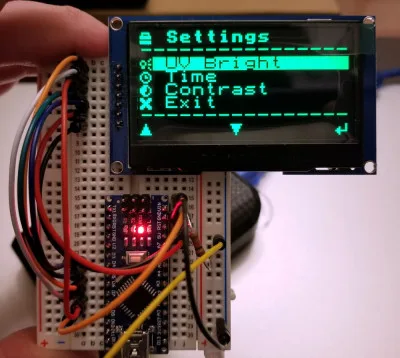
An earlier prototype build of the interface.
To that end, [sjm4306] is working on a very impressive controller for all your homebrew UV curing needs. The device is designed to work with cheap UV strip lights that can easily be sourced online, and all you need to bring to the table is a suitable enclosure to install them in. Here he’s using a metal paint can with a lid to keep from burning his eyes out, but we imagine the good readers of Hackaday could come up with something slightly more substantial while still taking the necessary precautions to not cook the only set of eyes you’ll ever have.
Of course, the enclosure isn’t what this project is really about. The focus here is on a general purpose controller, and it looks like [sjm4306] has really gone the extra mile with this one. Using a common OLED display module, the controller provides a very concise and professional graphical user interface for setting parameters such as light intensity and cure time. While the part is cooking, there’s even a nice little progress bar which makes it easy to see how much time is left even if you’re across the room.
At this point we’ve seen a number of hacked together UV cure boxes, but many of them skip the controller and just run the lights full time. That’s fine for a quick and dirty build, but we think a controller like this one could help turn a simple hack into a proper tool.
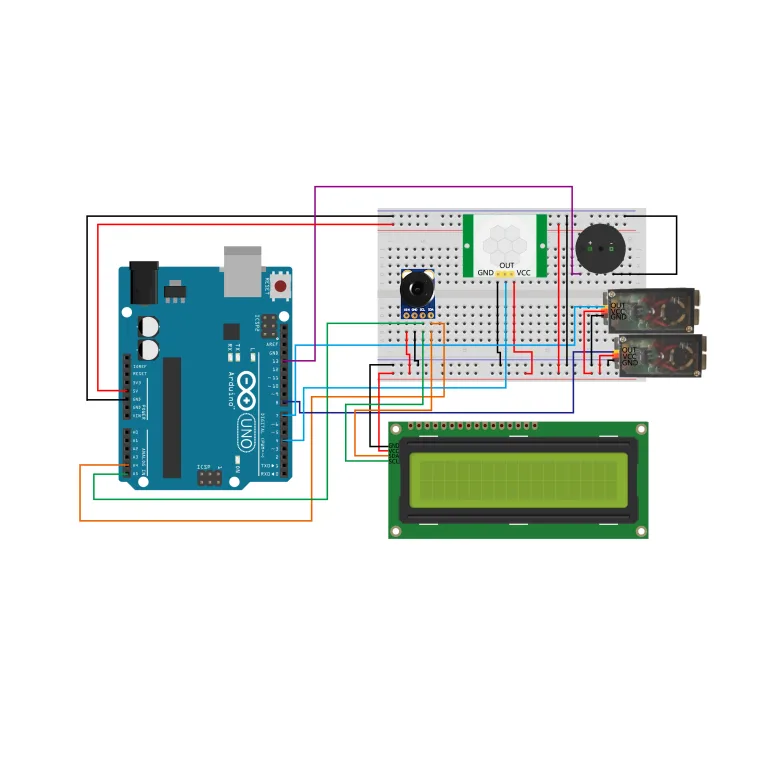
The purpose of this project is to automatically open the door by detecting body temperature. In fact, this project is to prevent patients with new coronary pneumonia from entering their homes. To a certain extent, guarantee the safety of the living environment. The following parts were used in this project: Arduino UNO, 2004 I2C…
SpiderFab technology from Tethers Unlimited will enable on-orbit fabrication: TUI is currently developing a revolutionary suite of technologies called “SpiderFab” to enable on-orbit fabrication ofof large spacecraft components such as antennas, solar panels, trusses, and other multifunctional structures. SpiderFab provides order-of-magnitude packing- and mass- efficiency improvements over current deployable structures and enables construction of kilometer-scale…
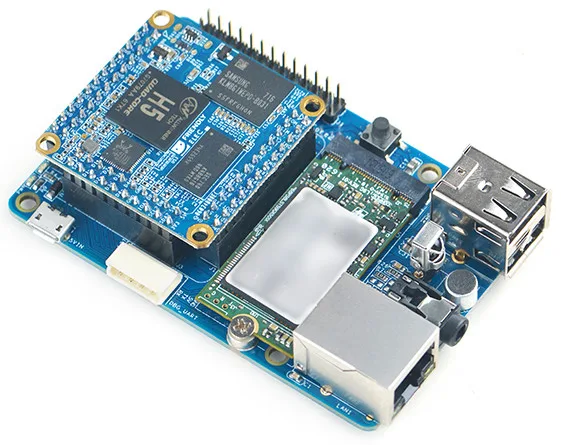
FriendlyElec’s new $8 NanoPi Neo Core and $25 NanoPi Neo Core2 boards are low-profile variants of the company’s earlier 40 x 40mm NanoPi Neo and NanoPi Neo 2 SBCs, but with their large, topside USB and Ethernet connectors replaced by a third dual-row pin header. The new boards are more like computer-on-modules (COMs) than single-board…
One common barrier for using deep learning to solve problems is the amount of data needed to train a model. The requirement of large data arises because of a large number of parameters in the model that machines have to learn. There are a lot of examples like Language Translation, playing Strategy Games and Self-Driving Cars which required…
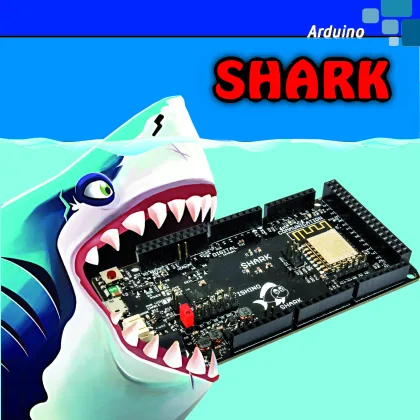
A new Arduino-like board ready to “devour” the competitors: not surprisingly, it was called Shark. Let’s see how to use it. Second and last episode. Read the first post about Fishino Shark The sea of Fishino, our series of prototyping boards compatible with the Arduino family, has recently completed its population: as we have…
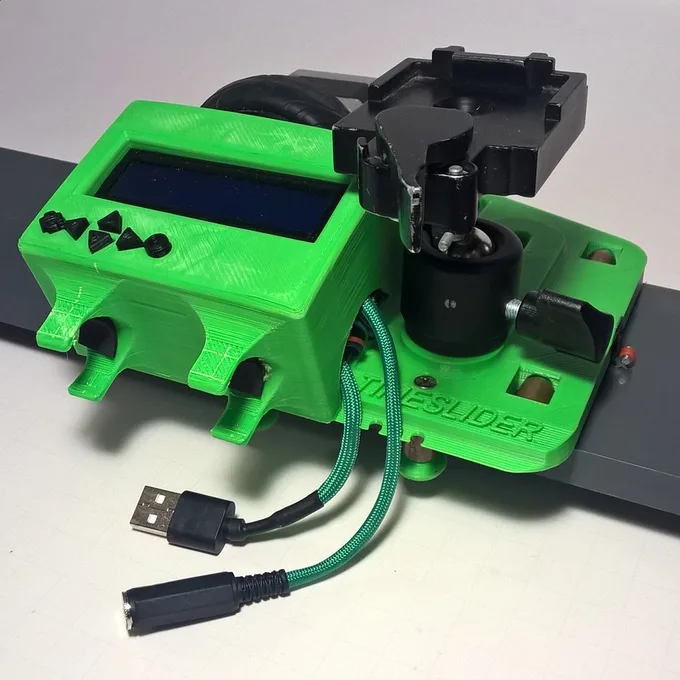
Anyone interested in photography will appreciate this Kickstarter campaign, most of all if you enjoy capturing time lapse motion photography of products, landscapes or subjects by keeping their videos engaging using timed movement. A Time Slider is a time lapse motion and camera control system with modular tracks. It’s Open-Source, modular and portable so it…
Open-Electronics.org is the brainchild of a world leader in
hobby electronics Futura Group srl. Open-Electronics.org is devoted to support
development, hacking and playing with electronics: we share exciting open projects
and create amazing products!
Open-Electronics.org is not just a container of ideas: it is also a web site lead
by a team of engineers and geeks who will take part in the discussions and give
support.
Our mission is to become a reference Open Source hacking site
with ideas and feedback aimed to enrich the community.