
Li-Ion or LiPo Battery Charger 7.4 V
SKU 7100-BREAKOUT020EAN 8219671095716Format: Battery packPin pitch: 1.25 mmOutput voltage: 7.4 VdcBattery chargers
Description
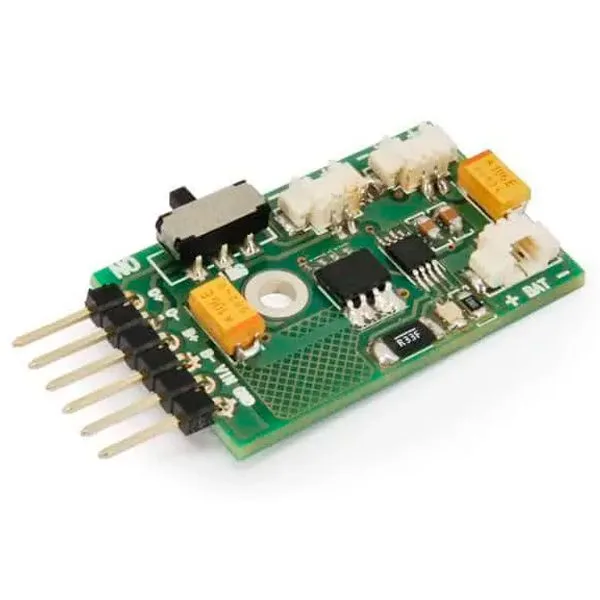
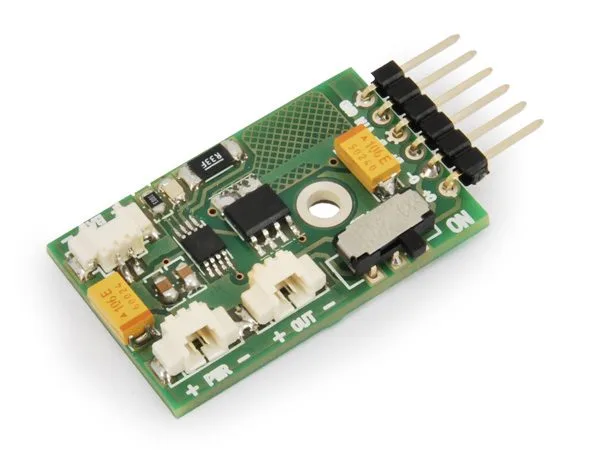
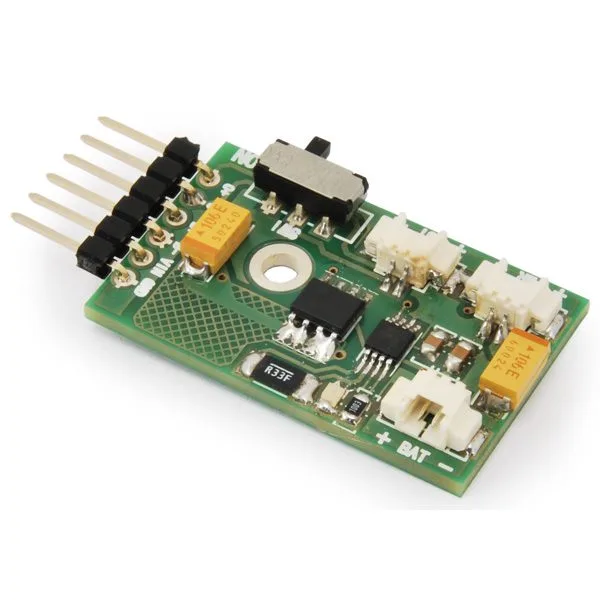
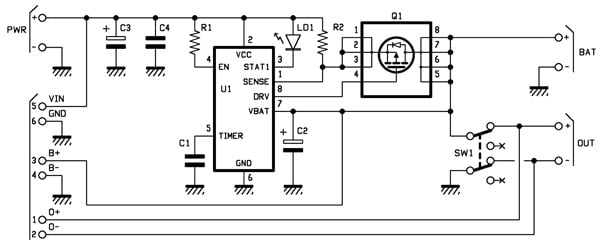
| Built around Microchip’s MCP73844-840I/MS, this charger can recharge two 3.7V Li-Ion/LiPo cells in series. The circuit has a switch to enable/disable the output voltage to the load, a battery charge status LED (LD1, connected to the STAT pin of U1), a power input connector (+/- PWR) for 9 to 12 Vdc (never exceed 12V under any circumstances) and a connector for the 7.4 volt lithium-ion battery (BAT). The power input/output and battery pins are also brought out to a 6-way pin strip connector. This module works only with 7.4V rechargeable batteries. The charging current is 330mA.
Please note: the board is supplied tested and complete with 3 female JST connectors (with leads) for wiring to the battery/power supply/output. It is also supplied with all SMD components already soldered, while the through-hole parts (pin strips) are supplied for you to solder. |
| Circuit diagram |
|
|
| Breakout boards |
|
Breakout boards are prototyping boards carrying the chip of interest already soldered in place, with its connections brought out to the edge of the board on pads whose pitch and termination are easy to work with; the connections are normally pads on a 2.54 mm pitch, like those of classic DIP chips. To help anyone who would like to use SMD parts but lacks the tools or the skill to solder them, a number of chips (sensors, switching regulators, battery chargers, linear amplifiers and so on) have been selected and mounted on ready-to-use boards. These breakout boards are both an aid for those who want the best of SMD electronics ready to go in a “traditional” format, and for those who — even though they can work with SMD parts — need those parts available on prototyping boards so they can add them to existing circuits and run tests, that is, to build prototypes using the functions of those chips before committing to the final printed circuit board of a piece of equipment. |
| Documentation and useful links |
You may also like…
-
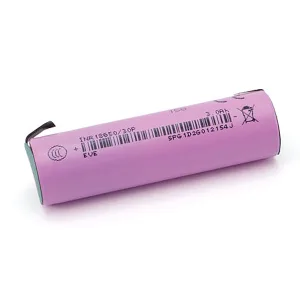 Rechargeable batteries
 -
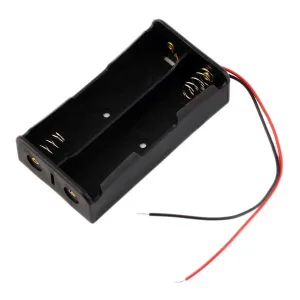 Battery holders
 -
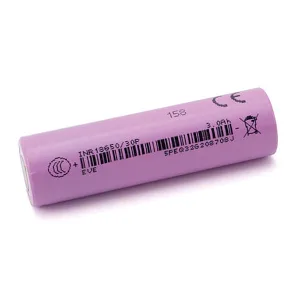 Rechargeable batteries
Related products
-
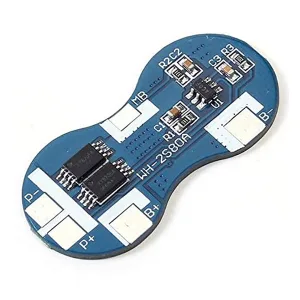 Battery protection
 -
 Battery chargers
 -
 Battery chargers
 -
 Battery chargers
 -
 Mobile phone accessories
 -
 Battery chargers
 -
 Battery protection
 -
 Battery chargers