Similar Posts
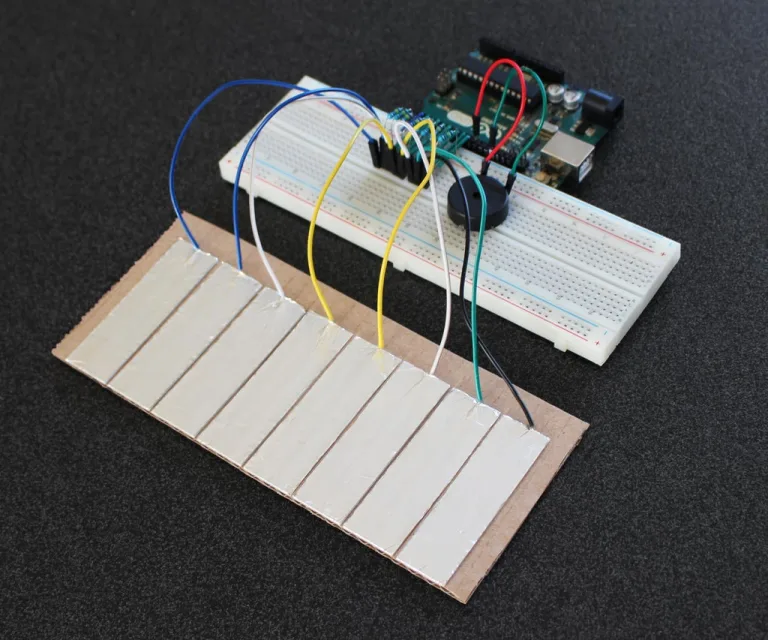
Arduino tinfoil piano
Let’s see how to build a small piano using Arduino, a buzzer and aluminum foil. The principle used is the capacitive sensor, capable of detecting the electrical capacity of the human body. The sensor setup requires a medium to high value resistor, a wire and a piece of aluminum foil at the end. More info…
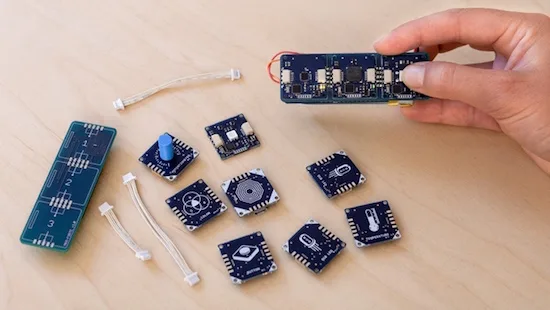
ESLOV is the amazing new IoT invention kit from Arduino
Introducing ESLOV, a revolutionary plug-and-play IoT invention kit. ESLOV consists of intelligent modules that join together to create projects in minutes with no prior hardware or programming knowledge necessary. Just connect the modules using cables or mounting them on the back of our WiFi and motion hub. When done, plug the hub into your PC. ESLOV’s…
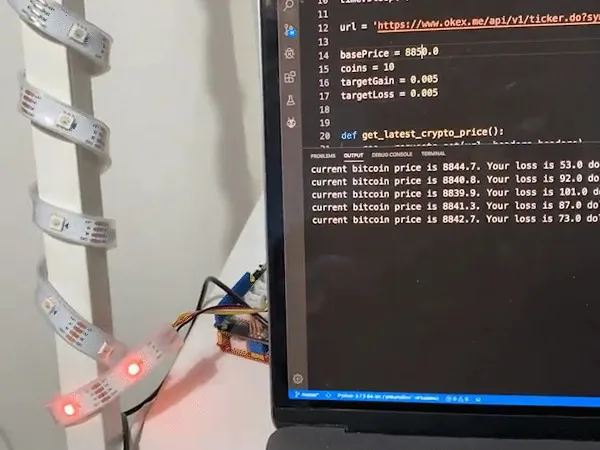
Visualize your bitcoin gain and loss with arduino & python
To get real-time bitcoin data, I used an api provided by OKex, which is a large crypto currency exchange. Then I used python to calculate my gain and loss based on the streaming data. I set my target gain and loss to 5% everyday, which means more lights are on, my investment is closer to…
Maker Faire Rome 2020: how to take part
It will be possible to access the platform during the days of the event with a simple registration (all useful information will be available on the portal https://makerfairerome.eu/it/). To improve the visitor’s experience, you just have to profile yourself by expressing preferences on the themes and activities that you expect to find during the event….
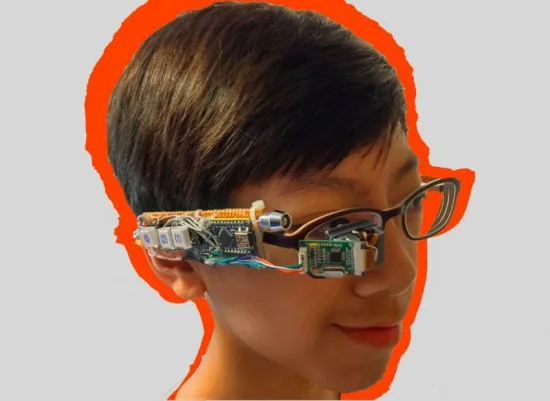
Make your DIY smart glasses running on Arduino
After Google announced the stopping of Google Glasses production (but not the development) the DYI community started proposing charming alternatives. Here is one! Jordan Fung is a 13-year-old maker and programmer based in Hong Kong. He recently developed Arduino-based smart glasses called Pedosa Glass, which are able to activate, in this first release, a flashlight…
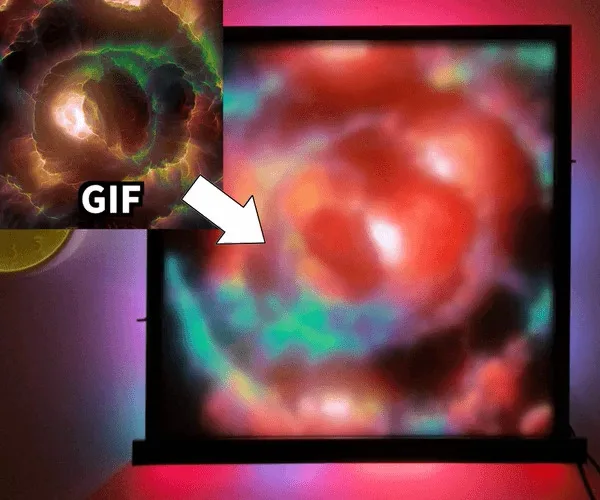
Continuum – Slow Motion LED Art Display
Continuum is a light art display that is continuously in motion, with options to move quickly, slowly, or incredibly slow. The RGB LEDs in the display are updated 240 times per second, with unique colors calculated each update. A slider on the side of the display controls if the LEDs play back the content –…