Flexible and Printed Electronics: The Circuits of the Future
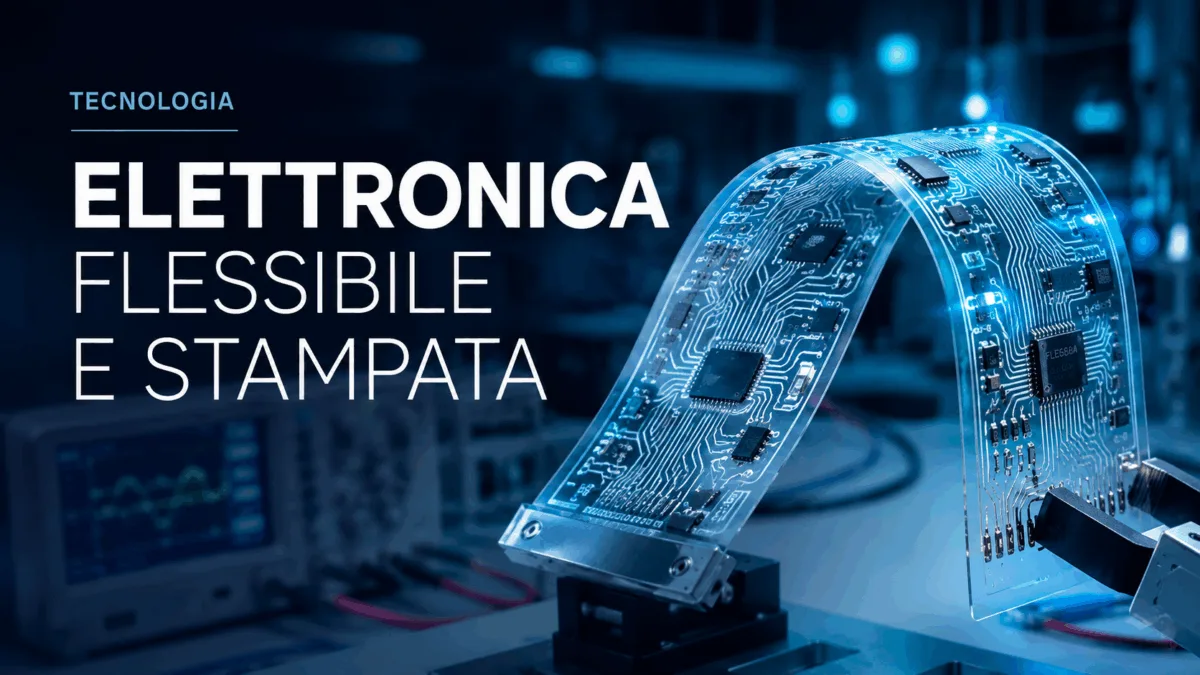
This article offers an overview of flexible and printed electronics, two technologies that are changing the way circuits and electronic devices are designed. We are no longer talking only about traditional rigid PCBs, but about thin, deformable boards that can adapt to curved surfaces, designed for medical, wearable, automotive, and industrial applications where lightness, flexibility, and integration are increasingly important.
Flexible and printed electronics: when circuits bend to new needs
Electronics is now present in every area of daily life, but traditional printed circuit boards are not always the most suitable solution. In many sectors, such as medical, automotive, and wearable devices, boards need to be light, thin, and able to adapt to curved or moving surfaces. This need gave rise to flexible electronics, a technology that makes it possible to create deformable and bendable circuits on materials such as polyimide, PET, or PTFE.
From rigid PCBs to flex-PCBs
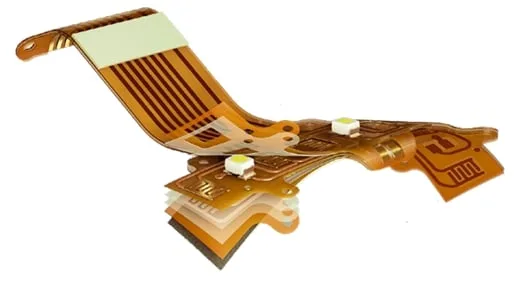
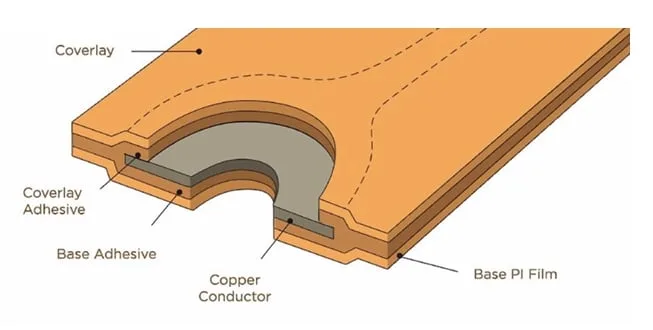
Flex-PCBs are printed circuits made on flexible substrates. Unlike traditional boards, they can bend and take up less space, making it possible to design more compact and integrated devices. They are used in applications where weight, size, and adaptability are key factors, such as wearable electronics, medical sensors, displays, and high-density electronic systems. These circuits can be single-layer, double-layer, multilayer, or combine rigid and flexible parts, giving rise to rigid-flex PCBs. Material choice is fundamental: Kapton, for example, is widely used thanks to its thermal stability and good mechanical resistance.
Printed electronics
Alongside flexible circuits, printed electronics is also developing. In this case, traces and some functional elements are deposited directly onto the substrate using techniques such as screen printing, inkjet printing, flexography, or rotogravure. This technology makes it possible to create sensors, NFC antennas, capacitive contacts, membrane keyboards, and devices for the automotive and biomedical sectors. The big advantage is the ability to print circuits on light, flexible, and even transparent materials.
A technology set to grow
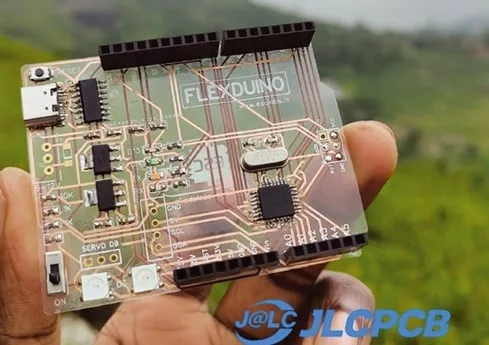
Flexible and printed electronics opens up new possibilities in the design of thinner, lighter devices that can be integrated into everyday objects. Production challenges remain, especially regarding assembly, reliability, and scalability, but the sector is constantly evolving. From wearable devices to industrial sensors, through medical and automotive applications, the circuits of the future will be increasingly less rigid and increasingly more adaptable to the shapes and materials around them.