Pi-Ener-lite: Compact UPS with Fuel Gauge and RTC for Raspberry Pi Zero
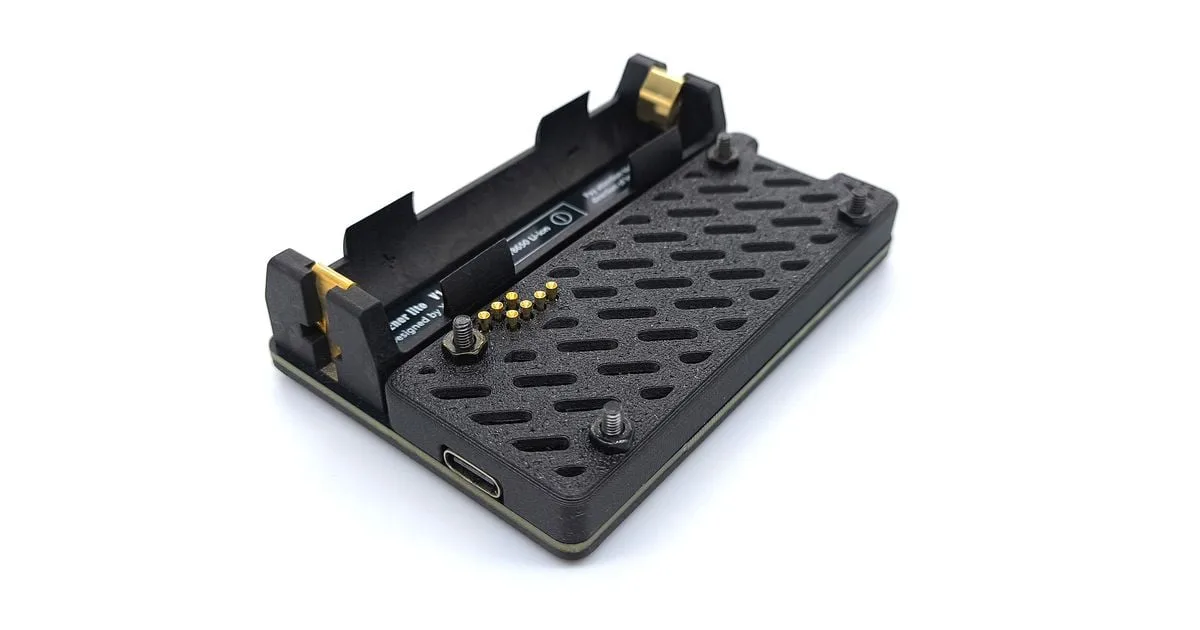
Pi-Ener-lite is a compact UPS power supply designed by ACE design studio for the Raspberry Pi Zero. It connects to the board via 7 spring-loaded pogo pins, which handle both power delivery and data reading. The project integrates an 18650 battery, a CW2015 fuel gauge chip, and a DS1307 RTC chip, offering a complete uninterruptible power supply in a small footprint.
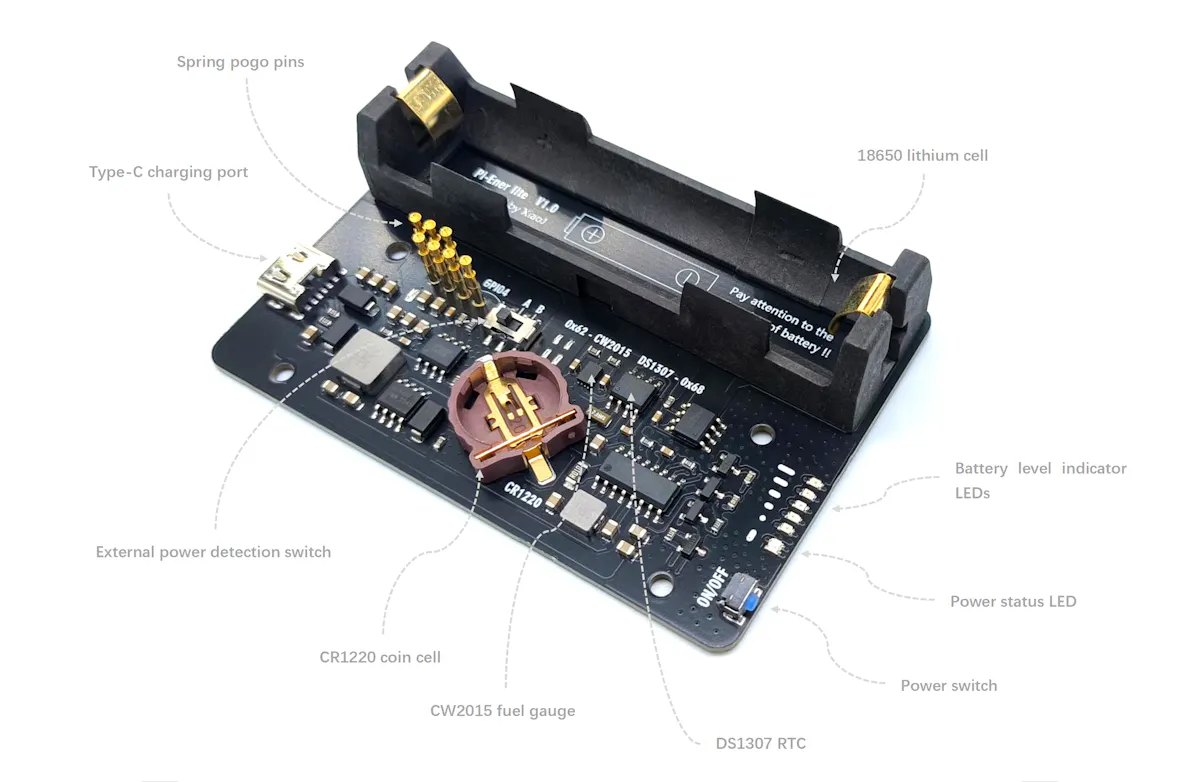
Operation is simple and reliable. When external power is lost, the system automatically switches to battery power. It also supports simultaneous charging and discharging, so you can use the Raspberry Pi Zero while the battery recharges. The whole setup is protected against overcharge, over-discharge, overcurrent, and short circuits.
Battery measurement and RTC
The CW2015 fuel gauge chip measures battery voltage and remaining capacity with ±2% accuracy. The DS1307 RTC chip, powered by a CR1220 coin cell, keeps time even when the main battery is removed. This combination makes Pi-Ener-lite a truly complete UPS for applications that require operational continuity.
Fuel gauge and RTC data are read over I2C, so you can access them easily from Python. The project includes Python examples and detailed documentation. An optional open-source 3D-printable case protects the entire system. Total cost is around $35.
Why choose Pi-Ener-lite
Pi-Ener-lite is a compact UPS specifically for the Pi Zero. Unlike other solutions, it leaves the GPIO connector free, so you can attach other modules without issues. It also adds battery measurement and an RTC, two features often missing from DIY UPS builds. The open-source 3D-printable case adds versatility.
The project is designed for those who want a reliable backup power supply without taking up space. The board connects in seconds thanks to the spring-loaded pogo pins. The CW2015 fuel gauge lets you monitor remaining charge precisely, avoiding sudden shutdowns. If you need a professional solution for your Pi Zero, this project fits the bill.
- Connection via 7 spring-loaded pogo pins, no soldering
- 18650 battery with CW2015 fuel gauge for charge monitoring
- DS1307 RTC with CR1220 battery to keep time
- Protection against overcharge, over-discharge, overcurrent, and short circuits
- Open-source 3D-printable case
To build the project, you need an 18650 battery and a CR1220 coin cell. The rest of the components are already mounted on the board. If you want to power the system from a higher voltage, you can use a 12V DC-DC step-up converter to adapt the input. Alternatively, for industrial applications, consider a DC-DC converter with 36-48V input and 24V output.
Getting started with Pi-Ener-lite
The first step is to connect the board to the Raspberry Pi Zero via the pogo pins. Then install the drivers for the CW2015 and DS1307. Finally, write a simple Python script to read voltage and time. The project board includes ready-to-use examples.
If you want a more powerful system, you can pair Pi-Ener-lite with a Raspberry Pi 5. In that case, you must adapt the power supply, because the Pi 5 requires more current. For the Pi Zero, the solution works perfectly as is. The project is designed to be simple, compact, and reliable.
In conclusion, Pi-Ener-lite is a well-designed UPS with quality components and clear documentation. The ability to print a 3D case makes it even more versatile. If you’re looking for a backup power supply for your Raspberry Pi Zero, this project deserves attention.