Similar Posts
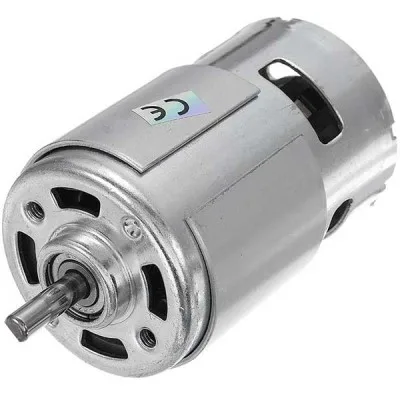
24V DC MOTOR – 12,000 RPM
ByoeadminPowerful motor with 24V dc power supply and a rated speed of 12,000 RPM. Consumption: 2.5 A, engine dimensions (mm): Ø 43×83, spindle: Ø 5×13, weight: about 348 grams. Go to Open-Electronics Store Build it yourself Boards, sensors and kits for projects like this one. Browse the shop
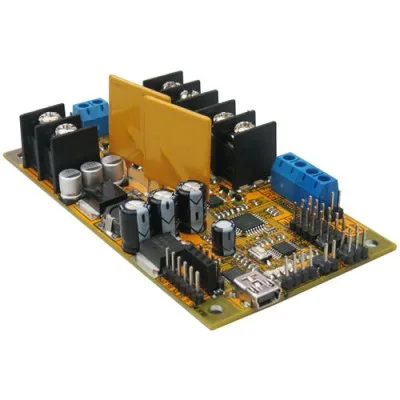
DAGU T REX Driver board
ByoeadminBased on the ATmega328P, the DAGU’s T’REX driver board is a board capable of controlling the speed and direction of rotation of two DC motors with a continuous 9 A current (40 A peak) and 4 RC servos. Equipped with a 3-axis accelerometer and self-resetting fuses (PTC), it can be controlled in I2C, RC mode…
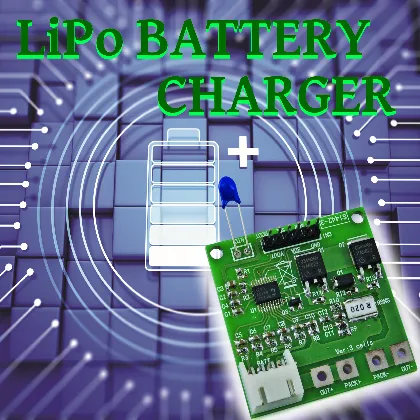
LiPo Battery Charger
ByoeadminComplete charger in breakout board format based on the integrated BQ76920, capable of managing 3 to 5 cells. The charging of lithium batteries, whether common Li-ion, LiPo or LiFePO4, requires particular precautions that make it more difficult and delicate than it is in accumulators such as lead batteries (for which it is enough…
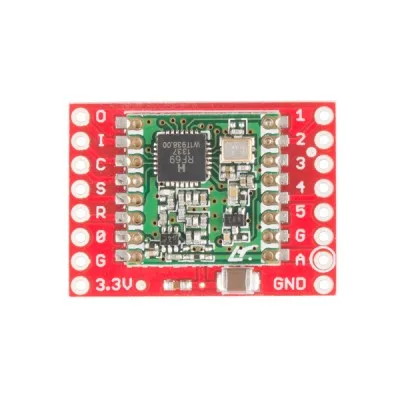
Breakout Board with RFM69 (434 MHz)
ByoeadminBreakout board based on the 434 MHz RFM69HCW transceiver module. It uses the SPI (Serial Peripheral Interface) interface to communicate with Arduino or another host microcontroller, operates in the ISM radio band (Industry, Science and Medicine) which does not require a license. It is able of transmitting up to 100 mW at 300 kbps, covering…
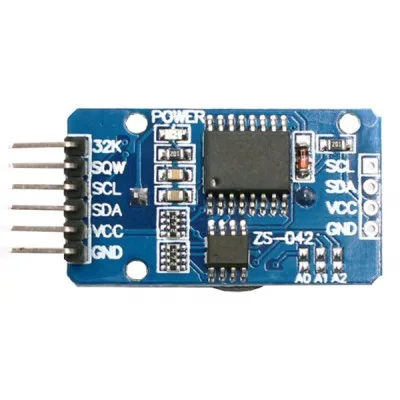
Breakout with DS3231 & EEPROM
ByoeadminRTC module (Real Time Clock) based on chip DS3231. It has a 32Kb AT24C32 EEPROM memory to store user data, I2C interface, temperature compensated crystal oscillator (TCXO), 32.768 kHz square wave output pin, 3.3 to 5.5 volt power supply . The RTC allows you to count the seconds, minutes, hours, day, date, month and year…
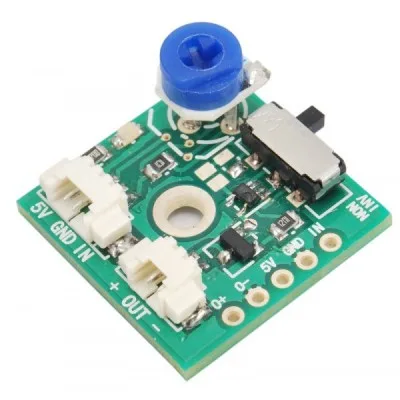
Comparator module
ByoeadminBreakout board designed for working as a voltage comparator. Designed for “snap” circuits, its output can take two levels: 0V and the main power. The module can operate with a voltage between 2.25 and 5.5 V with a time absorption of 4 μA. Thanks to the double diverter, the comparison can…