ESP32 – 32 GPIO development board with WiFi and Bluetooth
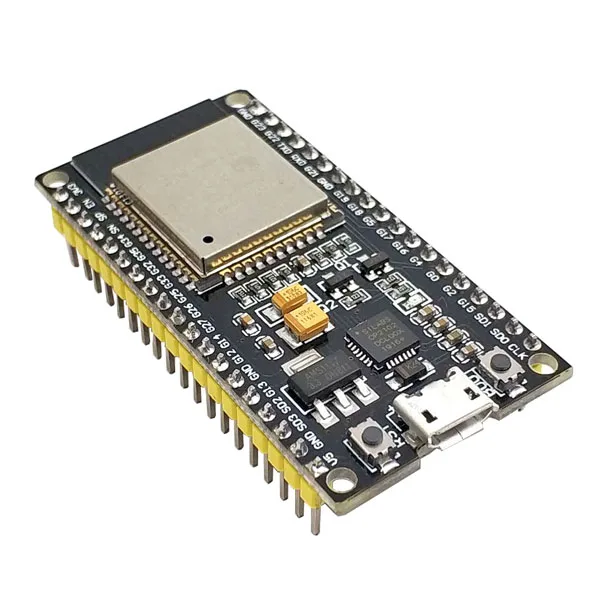
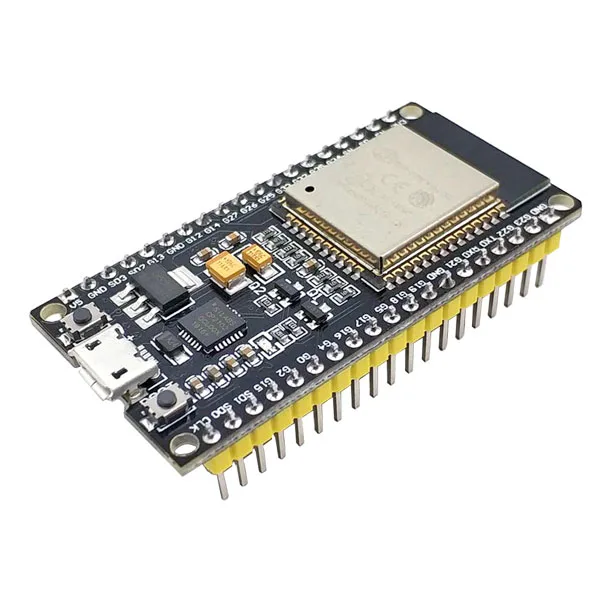
Board based on the ESP32 (ESP-WROOM-32) with Wi-Fi 802.11 b/g/n, Bluetooth and 32 GPIO.

SKU 1606-HR0204EAN 8219671099769Item type: Assembled, Board,

Description

38-pin version of the compact open source development and prototyping board based on the ESP32 (ESP-WROOM-32). It integrates Wi-Fi 802.11 b/g/n, dual-mode Bluetooth (classic and BLE) and 32 GPIO.

It supports data rates up to 150 Mbps, delivers 20.5 dBm of output power at the antenna for maximum range and draws only 5 ยตA in sleep mode.

It also provides interfaces for temperature sensors, touch sensors, SD card, UART, SPI, SDIO, I2C, LED PWM, Motor PWM, I2S, IR, a micro USB connector, a Boot button and a reset button.

It can be used in a wide range of applications such as wearable devices, low-power sensor networks, audio headsets, smart plugs, home automation, mesh networks, industrial wireless control, wearable electronics and so on. Dimensions (mm): 55x28x14.

Programmable with the Arduino IDE, it includes command interpreters for languages such as LUA.

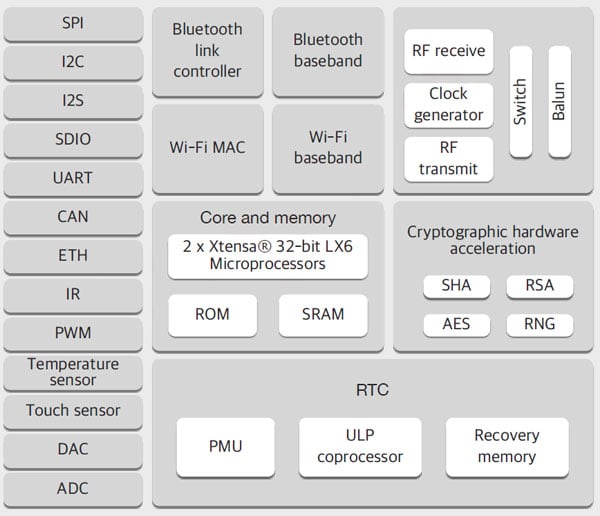
Block diagram
Technical features
  • CPU and memory
    โ€“ Xtensaยฎ single-/dual-core 32-bit LX6 microprocessor(s), up to 600 DMIPS
    โ€“ 448 kB ROM
    โ€“ 520 kB SRAM
    โ€“ 16 kB SRAM in RTC
    โ€“ 4 MB Flash memory
  • Wi-Fi
    โ€“ 802.11 b/g/n HT40 Wi-Fi transceiver, baseband, stack and LwIP
    โ€“ Sniffer / Station / SoftAP modes and Wi-Fi direct mode
    โ€“ Maximum data rate 150 Mbps@11n HT40, 72 Mbps@11n HT20, 54 Mbps@11g and 11 Mbps@11b
    โ€“ Maximum transmit power 19.5 dBm@11b, 16.5 dBm@11g, 15.5 dBm@11n
    โ€“ Minimum receiver sensitivity -97 dBm
  • Bluetooth
    โ€“ Compliant with the Bluetooth v4.2 BR/EDR and BLE specifications
    โ€“ NZIF receiver with -97dBm sensitivity
    โ€“ Class 1, class 2 and class 3 transmitter
    โ€“ Transmit power +12dBm
    โ€“ NZIF receiver with -97dBm sensitivity
    โ€“ Bluetooth and BLE multi-connections
  • Clocks and Timers:
    โ€“ Internal 8 MHz oscillator with calibration
    โ€“ Internal RC oscillator with calibration
    โ€“ External oscillator from 2 MHz to 40 MHz
    โ€“ External 32 kHz oscillator for the RTC, with calibration
    โ€“ Two timer groups, each including 2 x 64-bit timers and 1 x main watchdog
    โ€“ RTC watchdog
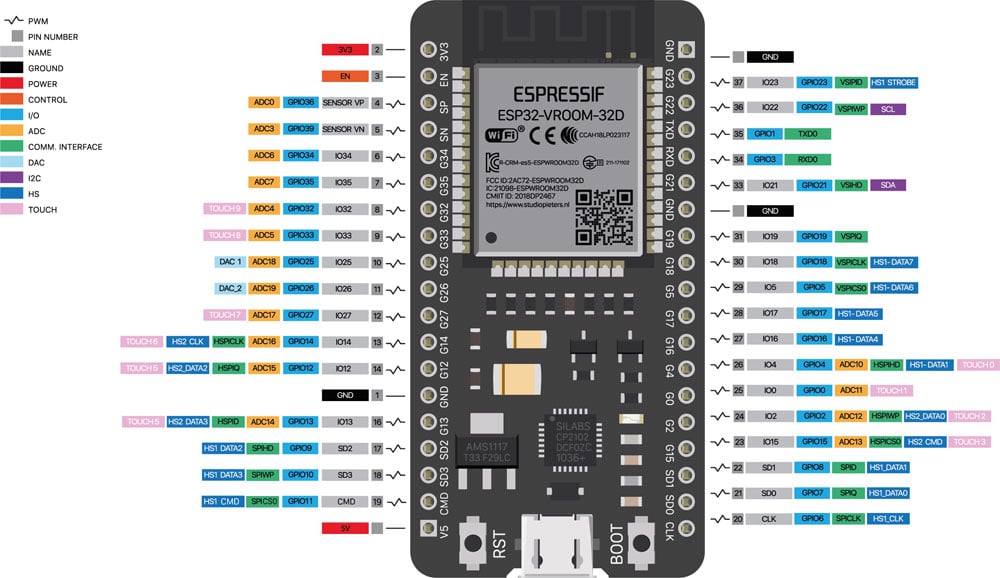
  • Peripheral interface (32 GPIO):
    โ€“ 12-bit SAR ADC with up to 18 channels
    โ€“ 2 x 8-bit A/D Converters
    โ€“ 10 Touch sensors
    โ€“ Temperature sensor
    โ€“ 3 for SPI, 2 for I2S, 2 for I2C, 2 for DAC, 3 for UART
    โ€“ 1 host (SD / eMMC / SDIO), 1 slave (SDIO / SPI)
    โ€“ Ethernet MAC interface with dedicated DMA and IEEE 1588 support
    โ€“ CAN 2.0
    โ€“ IR (TX / RX)
    โ€“ Motor PWM, LED PWM with up to 16 channels
    โ€“ Hall sensor
    โ€“ Ultra-low-power analogue pre-amplifier
  • Security:
    โ€“ Supports the standard IEEE 802.11 security features, including WFA, WPA / WPA2 and WAPI
    โ€“ Secure boot
    โ€“ Flash encryption
    โ€“ 1024-bit OTP, up to 768 bit for customers
  • Programming:
    โ€“ Hold the โ€œbootโ€ button down while programming.
Installing the HR0204 (ESP32 WROOM) in the Arduino IDE
ย 

To install the ESP32 HR0204 board in your Arduino IDE, follow these instructions:

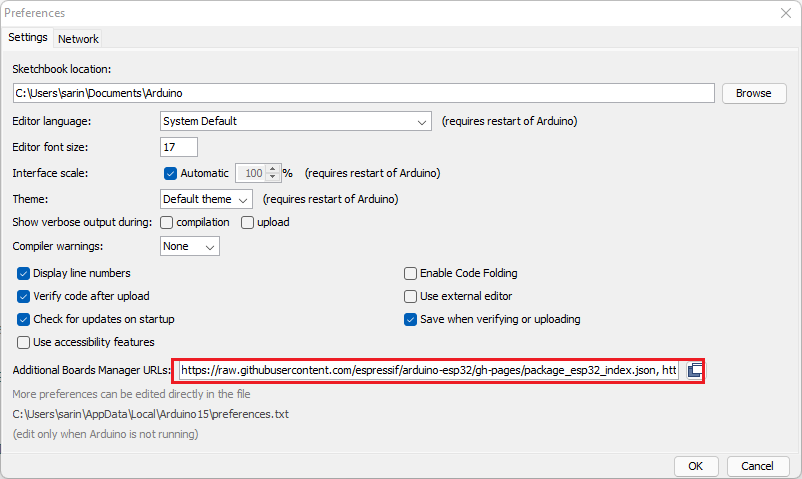
  • In the Arduino IDE go to File > Preferences
  • Enter the following in the โ€œAdditional Board Manager URLsโ€ field: https://raw.githubusercontent.com/espressif/arduino-esp32/gh-pages/package_esp32_index.json
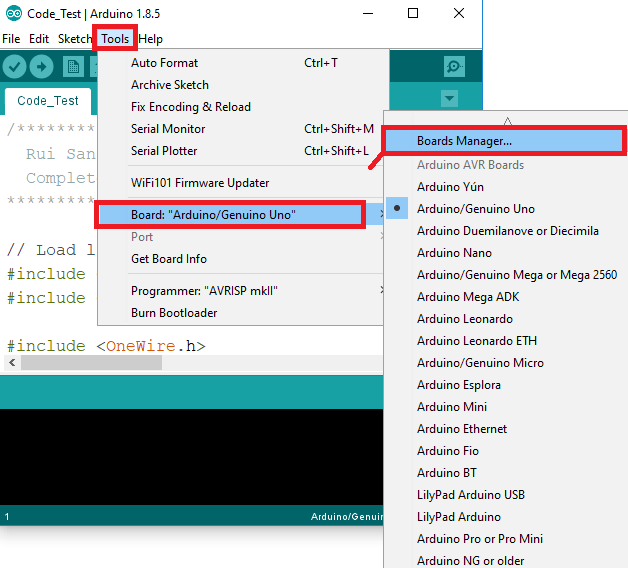
  • Open the Boards Manager: Tools > Board > Boards Managerโ€ฆ
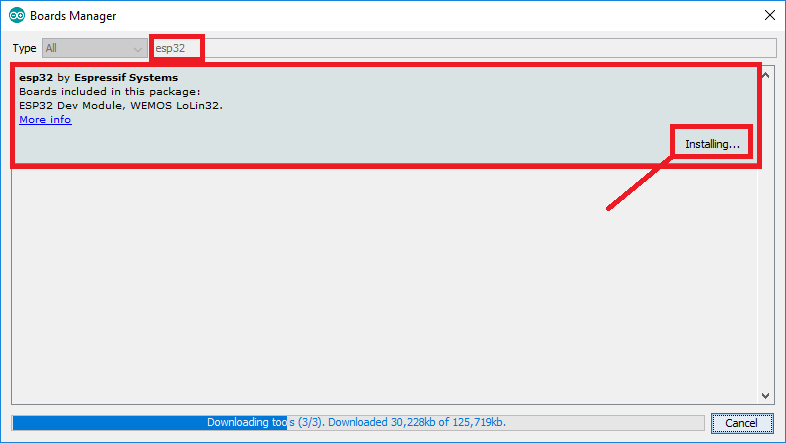
  • Search for ESP32 and press the install button for โ€œESP32 by Espressif Systems โ€œ
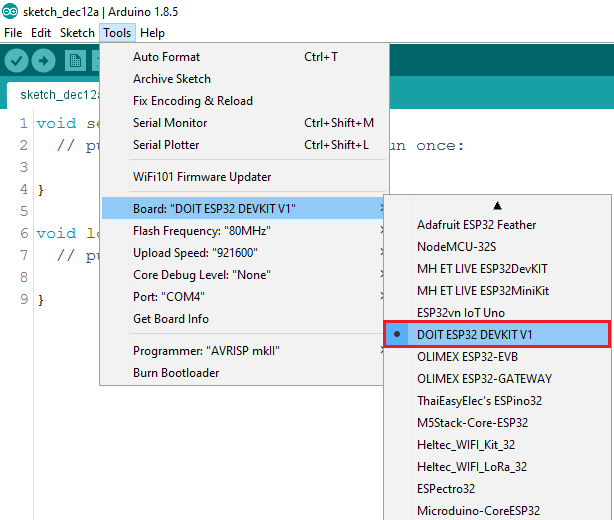
  • Select the DOIT ESP32 DEVKIT V1 board from the Tools > Board > ESP32 menu
  • Select the COM port that has been installed (the board must be connected to the USB port)
  • You are now ready to start programming
Documentation and useful links

Technical details

Dimensions (mm) 55x28x14
antenna on PCB
power supply from 3.6V to 5V (VIN) or through the micro USB connector
Frequency range 2.4 GHz - 2.5 GHz
Supports protection modes WEP, WPA/WPA2 PSK/Enterprise
Hardware-accelerated encryption AES / SHA2 / ECC / RSA-4096
Cryptographic hardware acceleration AES-HASH(SHA-2) library-RSA-ECC-Random Number Generator (RNG)

About us

Open-Electronics.org is the brainchild of a world leader in hobby electronics Futura Group srl. Open-Electronics.org is devoted to support development, hacking and playing with electronics: we share exciting open projects and create amazing products!

Open-Electronics.org is not just a container of ideas: it is also a web site lead by a team of engineers and geeks who will take part in the discussions and give support.

Our mission is to become a reference Open Source hacking site with ideas and feedback aimed to enrich the community.