
Prototyping Board with RP2040 and 868 MHz LoRa Module
SKU 7100-FTR2040_LORA868Item type: Assembled, BoardDevelopment systems, Raspberry Pi
Description
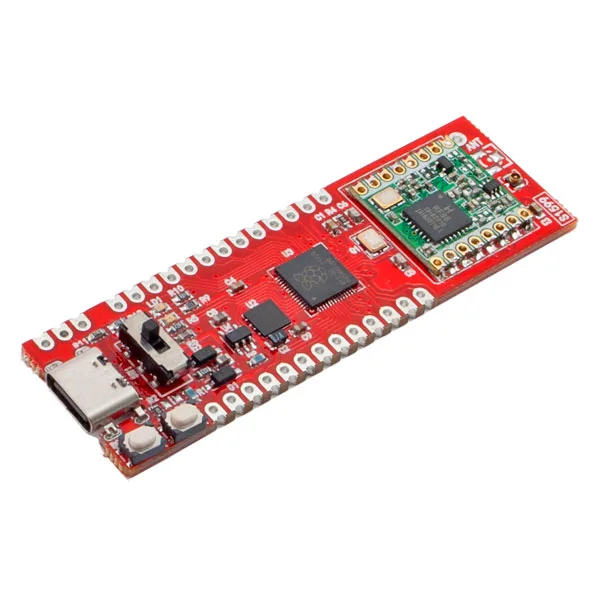
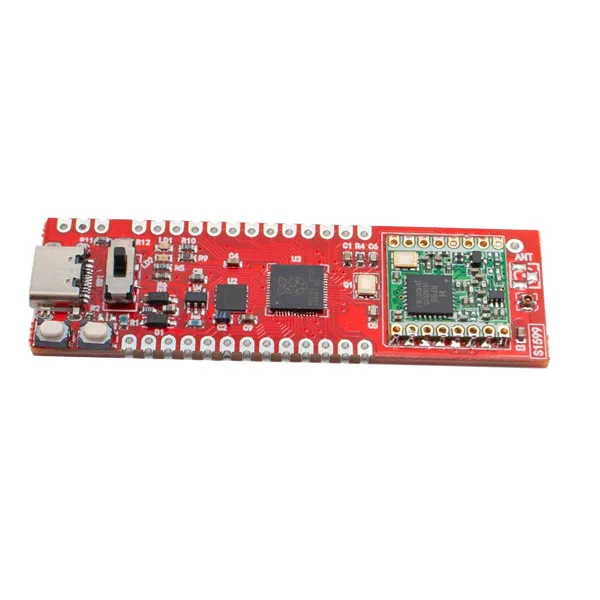
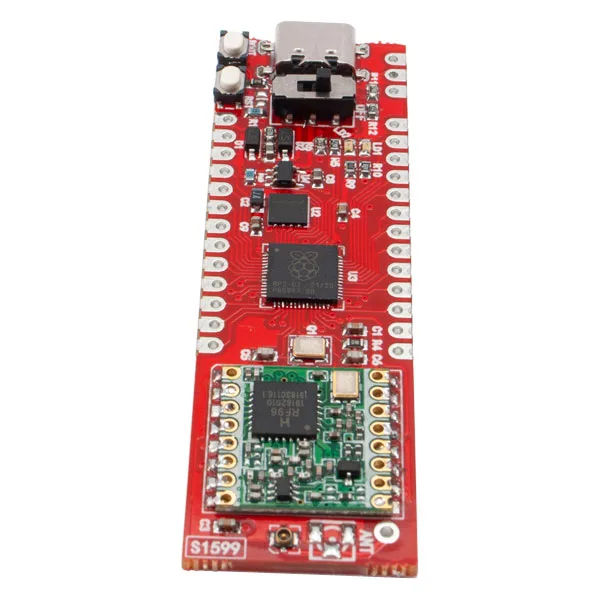
Prototyping Board with RP2040, the ideal solution for your most advanced projects. Equipped with a powerful Dual ARM Cortex-M0+ microcontroller reaching 133 MHz and an 868 MHz LoRa module, this board is designed to exceed every expectation. With 264 kB of SRAM and the possibility of expansion up to 16 MB of Flash memory, it offers unprecedented performance and flexibility.
Connectivity has never been so simple, thanks to the USB Type-C 3.0/3.1 connector, which ensures fast transfers and a user-friendly interface.
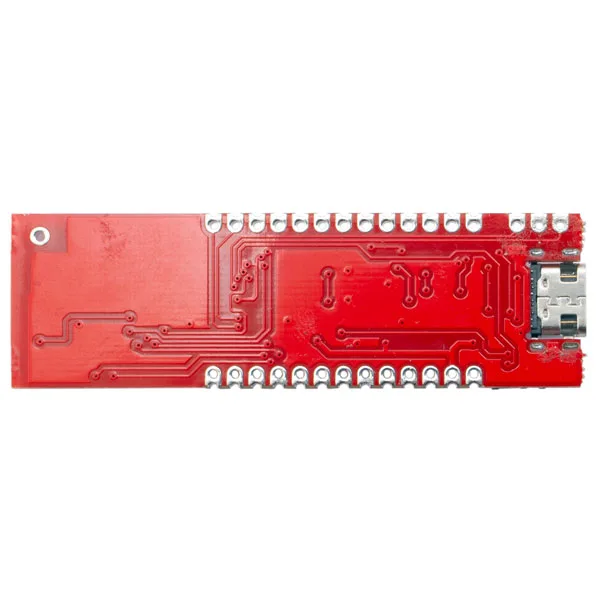
For designers who want a ready-to-use solution, the board offers convenience and easy integration. It can be used by plugging it into a breadboard via pin strips (not included) or soldered directly onto your projects as an SMD component, thanks to its compact dimensions of 68x21x7 mm and a weight of just 6.6 grams.
Its 22 GPIO, together with multiple peripherals such as 2 UART, 2 SPI, 2 I²C and 16 PWM channels, make it suitable for a wide range of applications, from robotics to IoT, while also ensuring optimized power consumption.
Don’t miss the opportunity to take your projects to the next level with this cutting-edge prototyping board. Whether you’re a hobbyist, a student or a professional, the RP2040 Prototyping Board with LoRa module and USB-C connectivity is the right choice for anyone looking for performance, versatility and innovation.
Available for download, a free course dedicated to the new RP2040 chip developed by the Raspberry Pi Foundation, useful for learning how to use the product presented here.
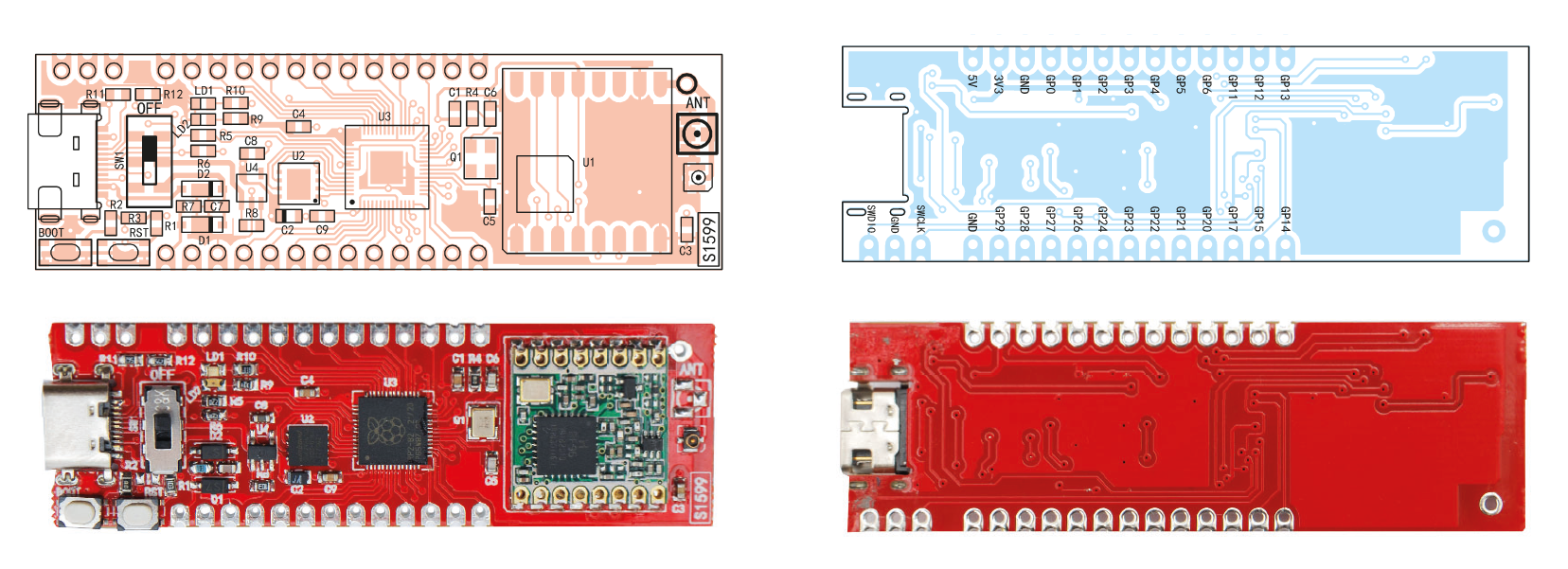
| Wiring diagram (click to enlarge) |
 |
 |
| Technical specifications |
|
| Breakout boards |
| Breakout boards are prototyping boards containing the component in question already soldered on, with its connections brought out to the edge of the board on easily usable pads in terms of pitch and termination; these are generally pads with a 2.54 mm pitch, like those of classic DIP ICs. To make it easier for those who would like to use SMD components but lack the means or skill to solder them, a number of ICs have been selected (including sensors, switching power supplies, battery chargers, linear amplifiers, etc.) and mounted on ready-to-use boards. These breakout boards are both an aid for those who want the best of SMD electronics already available in a “traditional” format, and for those who -while able to work with SMD components- need to have such components available on prototyping boards to apply them to existing circuits and run tests, or to build prototypes that integrate the functions of the relevant ICs, before making the final PCB of a piece of equipment. |
| Documentation and useful links |
Technical details
| Frequency range | 868 MHz |
|---|---|
| Interface | SPI |
| Receive sensitivity | -148dBm |
| Output power | +20dBm |
| Data Rate | max. 300 kbps |
| Antenna connector | IPEX, pad for wire antenna |
| Dimensions (mm) | 68x21x7 |
| Weight | 6.6 grams |
Related products
-
 Lab cables
 -
 Displays
 -
 Mains power supplies
 -
 Raspberry Pi
 -
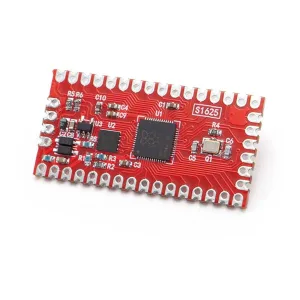 Development systems
 -
 Accessories
 -
 micro:bit
 -
 Raspberry Pi