
Spectrometer Breakout Board with AS72651, AS72652 and AS72653 Sensors
SKU 7100-BREAKOUT021EAN 8219671101530Item type: AssembledSensors, Sensors
Description
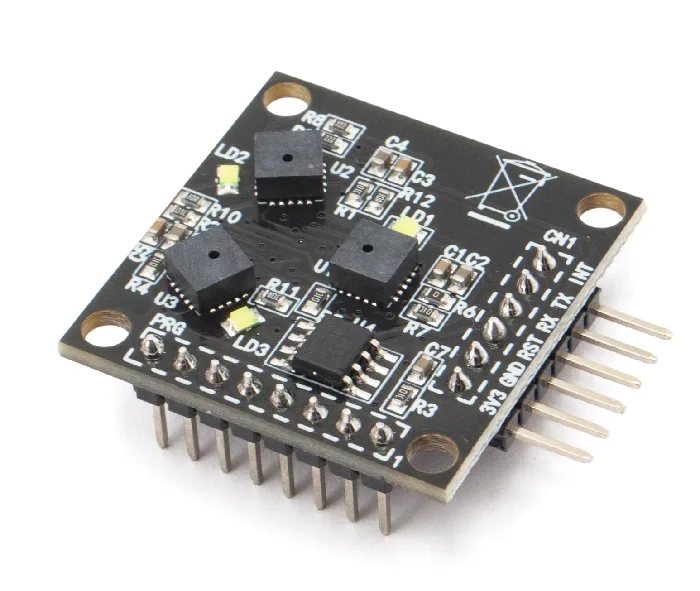
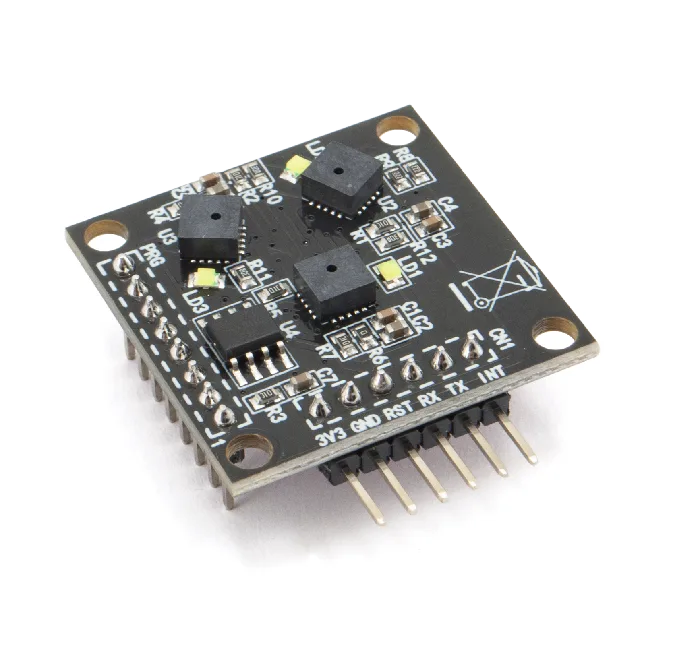
| Extend what you can measure with our breakout board based on the AMS AS72651, AS72652 and AS72653 light sensors.
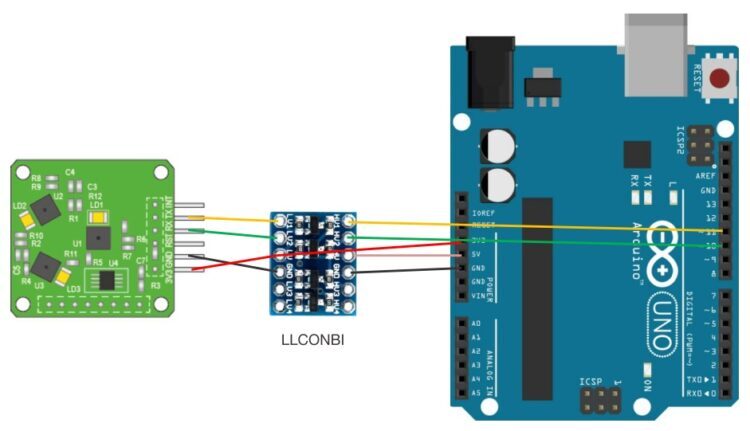
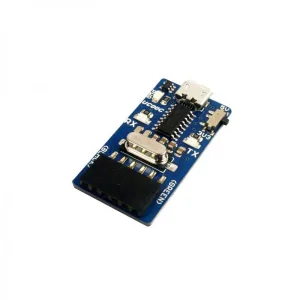
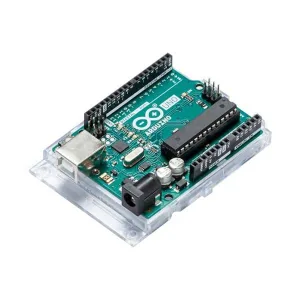
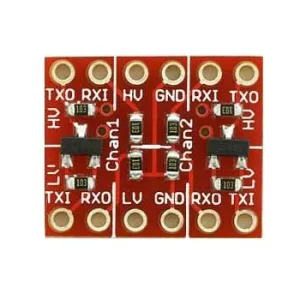
This powerful instrument connects easily to your Arduino Uno board (or any other microcontroller) and gives you the spectral response of materials and liquid mixtures. With this breakout you can analyse the spectrum of reflected light and judge the quality and authenticity of fine wines or olive oils. The results appear on the Arduino Serial Monitor and can be plotted as graphs on your PC. The board must be powered at 3.3 Vcc and communicates over serial at 115200 baud. To make sure it works properly, use a level shifter if your control board runs at 5V. Our spectrometry breakout board suits professional laboratories, home use and enthusiasts who want to explore the world of chemistry and biology. Note: the breakout board is supplied fully assembled, except for the pin strip. |
|
Spectrometry
|
|
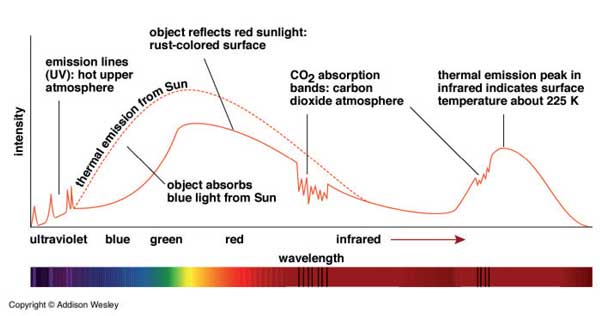
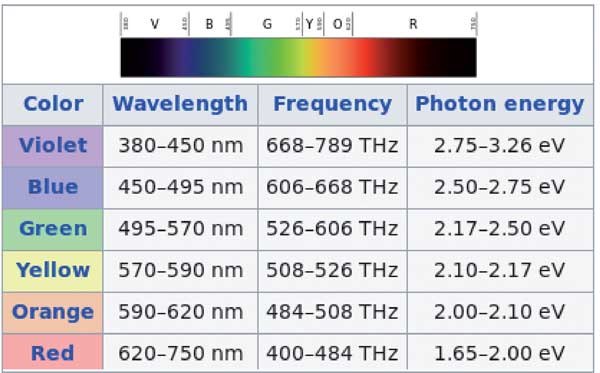
The light our eyes see (that is, the light our brain interprets) is only a portion of what the sun sends us at every moment, and it travels together with many other electromagnetic waves covering a very wide range of frequencies. This whole set of frequencies is called the spectrum. Our eye perceives only a part of the spectrum of light radiation that makes up sunlight, and that part is called the visible spectrum, or visible light. As it happens, the visible spectrum matches the frequencies with the greatest intensity in the sunlight that reaches the Earth; and this is no coincidence, but the result of the evolution of the human eye, which over the millennia has become tuned to exactly the most important part of the light spectrum striking our planet. When light strikes an object that does not absorb it completely (otherwise we would be dealing with what is known as a black body), part of it comes back: this optical phenomenon is commonly known as reflection. If that reflected light reaches our eye and carries a frequency within the visible spectrum, we see the object in the matching colour. So when we see a green leaf, that leaf has in fact absorbed all the other colours and reflected only the green component, that is a wave with a wavelength of around 520nm.
Reflected light carries more than colour alone: if we light a material with white light (the sum of every visible frequency) and it reflects only violet light, it means it has absorbed all the other frequencies. The set of frequencies an object captures is called its absorption spectrum and, since every material has a known absorption spectrum, that spectrum works as an identity code for the material itself. The idea matters enough to have earned a branch of physics that studies the interaction between light and matter: spectrometry, and the instrument used to measure that interaction is called a spectrometer. |
| Wiring diagram |
| Below is an example of how to wire the module to an Arduino running 5V logic. In this case a level shifter has been added. |
 |
| Absorption bands |
 |
| Documentation and useful links |
|
The full spectrometer project is described in a dedicated article. |
You may also like…
-
 Interface converters
 -
 Arduino
 -
 Communication
Related products
-
 Sensors
 -
 Sensors
 -
 Sensors
 -
 Sensors
 -
 Sensors
 -
 Sensors
 -
 Sensors
 -
 Sensors