Liquid Level Indicator for Tanks and Cisterns
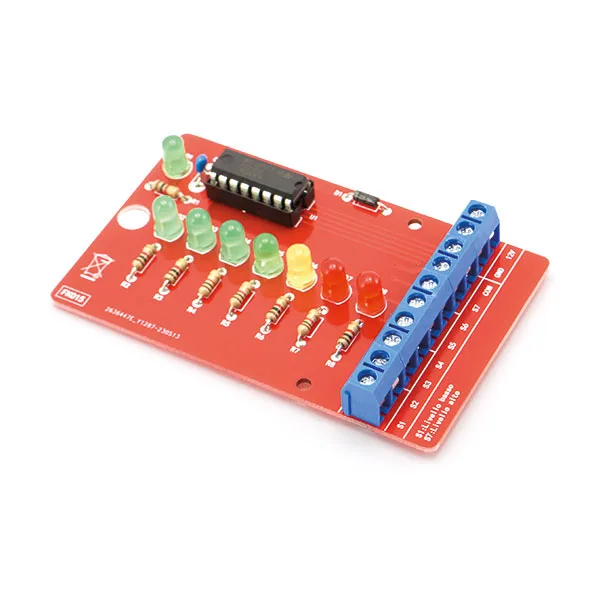
Liquid level indicator for vats, tanks and cisterns.

SKU 7100-FK015Item type: Assembled, Kit

Description


This monitoring device is useful for keeping an eye on the level of liquids (water, for instance) inside vats, tanks and cisterns. It has seven inputs, for connecting electrodes that can be positioned inside the tank. Each electrode drives its own LED, which lights up when the liquid reaches the level of that electrode.

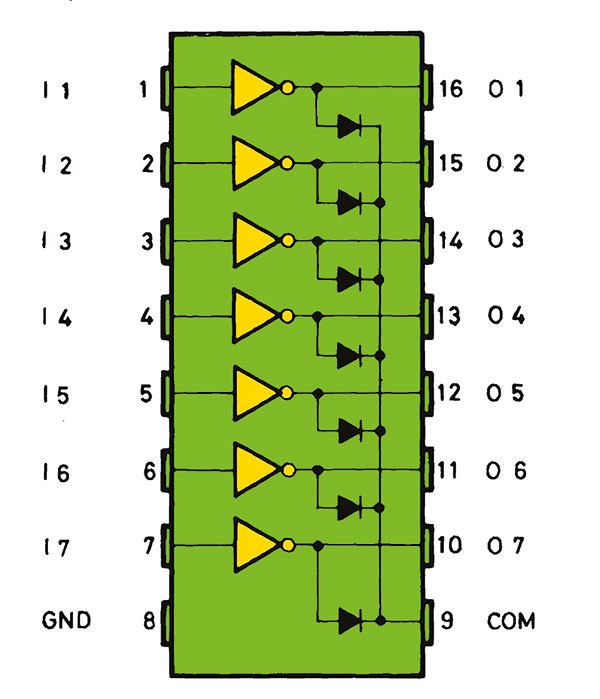
At the heart of the device is the ULN2003 integrated circuit, a versatile and rugged line driver. Each electrode is wired to a ULN2003 input through a contact that stays isolated until the liquid touches or covers it. When that happens the liquid acts as a resistance, letting current flow into the base of the corresponding Darlington inside the ULN2003. That switches the matching output on and lights the associated LED, showing the level reached.

The liquid level indicator for tanks and cisterns can show up to seven LEDs lit at the same time, corresponding to the liquid levels reached. The topmost level can be taken as the reference for the full capacity of the vat.

The kit is supplied with 10 m of cable and assembly instructions.

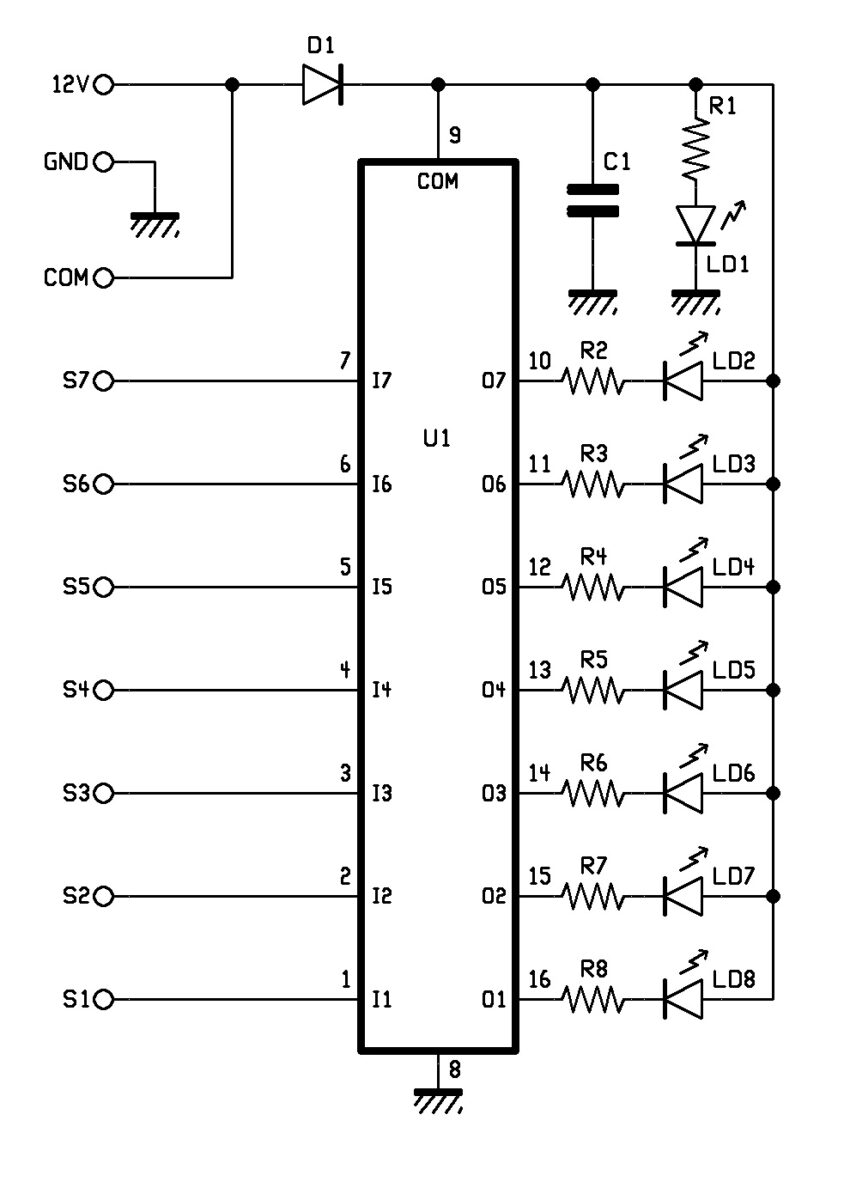
Circuit diagram
Liquid level indicator for tanks - Circuit diagram
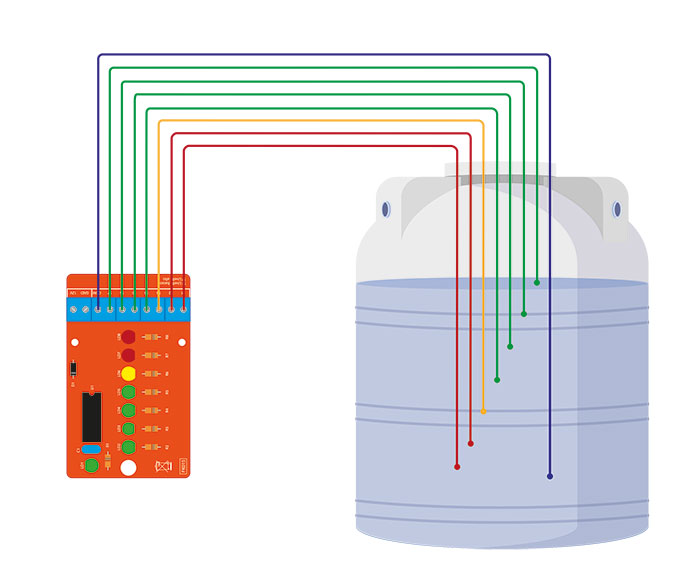
Wiring diagram
Liquid level indicator for tanks - Wiring diagram
ULN2003 pinout and internal diagram
FAQ
  • The wire/plate corrodes quickly and the unit stops working properly
    This happens because of electrolysis, which inevitably attacks the metal parts in contact with the water whenever the circuit is powered. Choosing the right material, together with proper insulation, solves the problem for good. The end of the wire must not be left bare in the water: it has to be connected to a plate or metal conductor in AISI 316L stainless steel (the grade most recommended for this purpose). The contact point, however, must be sealed with a gel or with a suitable amount of silicone, so as to prevent electrolysis.
    The level LEDs are driven by the current flowing through the water between the probes (the screws/plates). Whenever the circuit is powered, electrolysis inevitably starts. This process can produce a thin film of gas or surface oxidation, even on stainless steel (not all stainless grades are equally inert in the presence of stray currents, so it is important to choose the most suitable one). Another critical point is the joint between the electrical cable and the stainless steel screw. If the copper of the cable comes into contact with the water (even through capillary action or damp), a galvanic couple forms which accelerates oxidation, raising the electrical resistance and gradually “starving” the LED of current, so that the level reading becomes wrong.

Technical details

Supply voltage 12-14 Vdc
Current draw 200 mA
Number of detectable levels 7
Dimensions (mm) 50x84x22

About us

Open-Electronics.org is the brainchild of a world leader in hobby electronics Futura Group srl. Open-Electronics.org is devoted to support development, hacking and playing with electronics: we share exciting open projects and create amazing products!

Open-Electronics.org is not just a container of ideas: it is also a web site lead by a team of engineers and geeks who will take part in the discussions and give support.

Our mission is to become a reference Open Source hacking site with ideas and feedback aimed to enrich the community.