
USB Type-C Power Delivery 100W Breakout Board
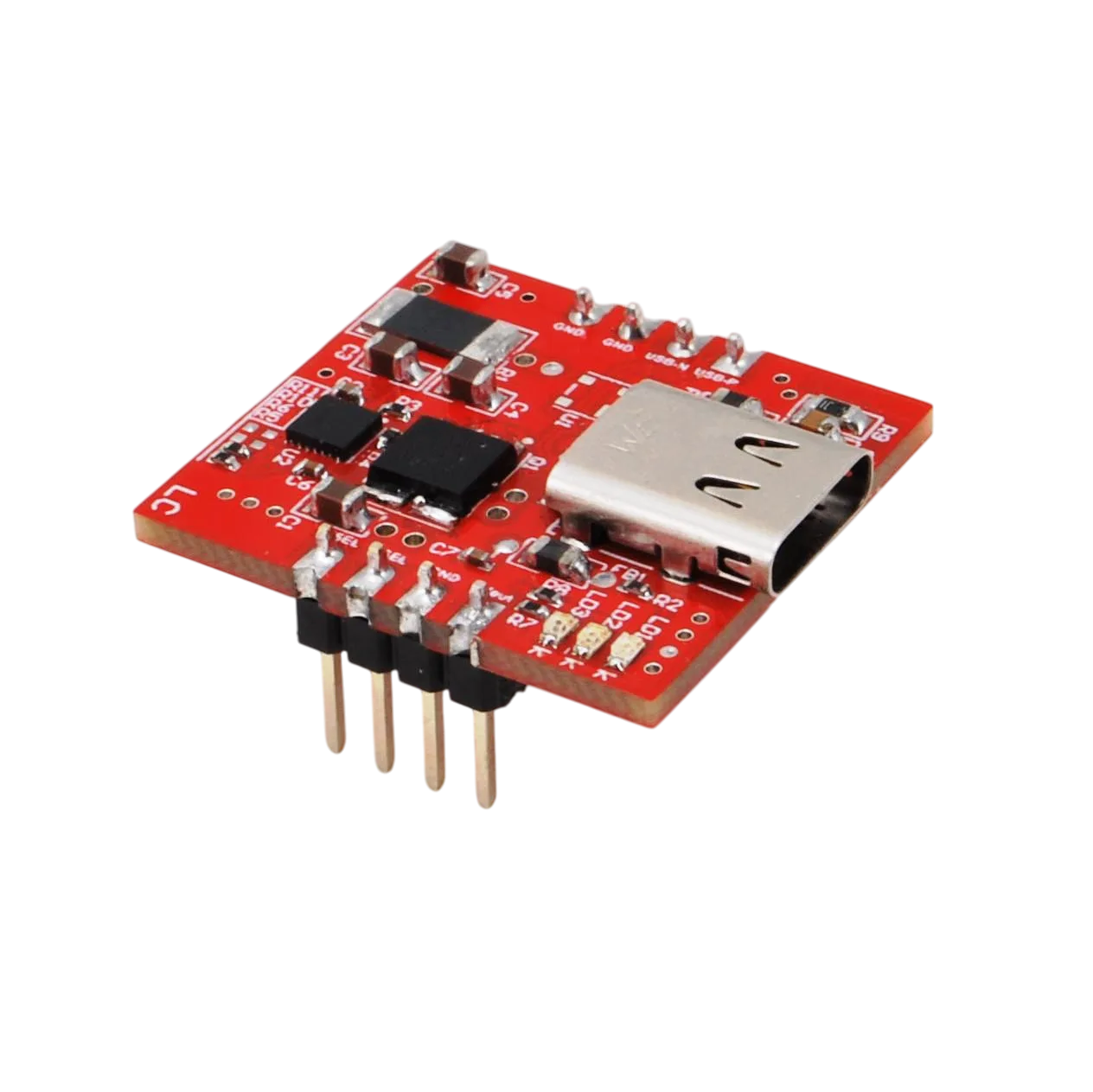
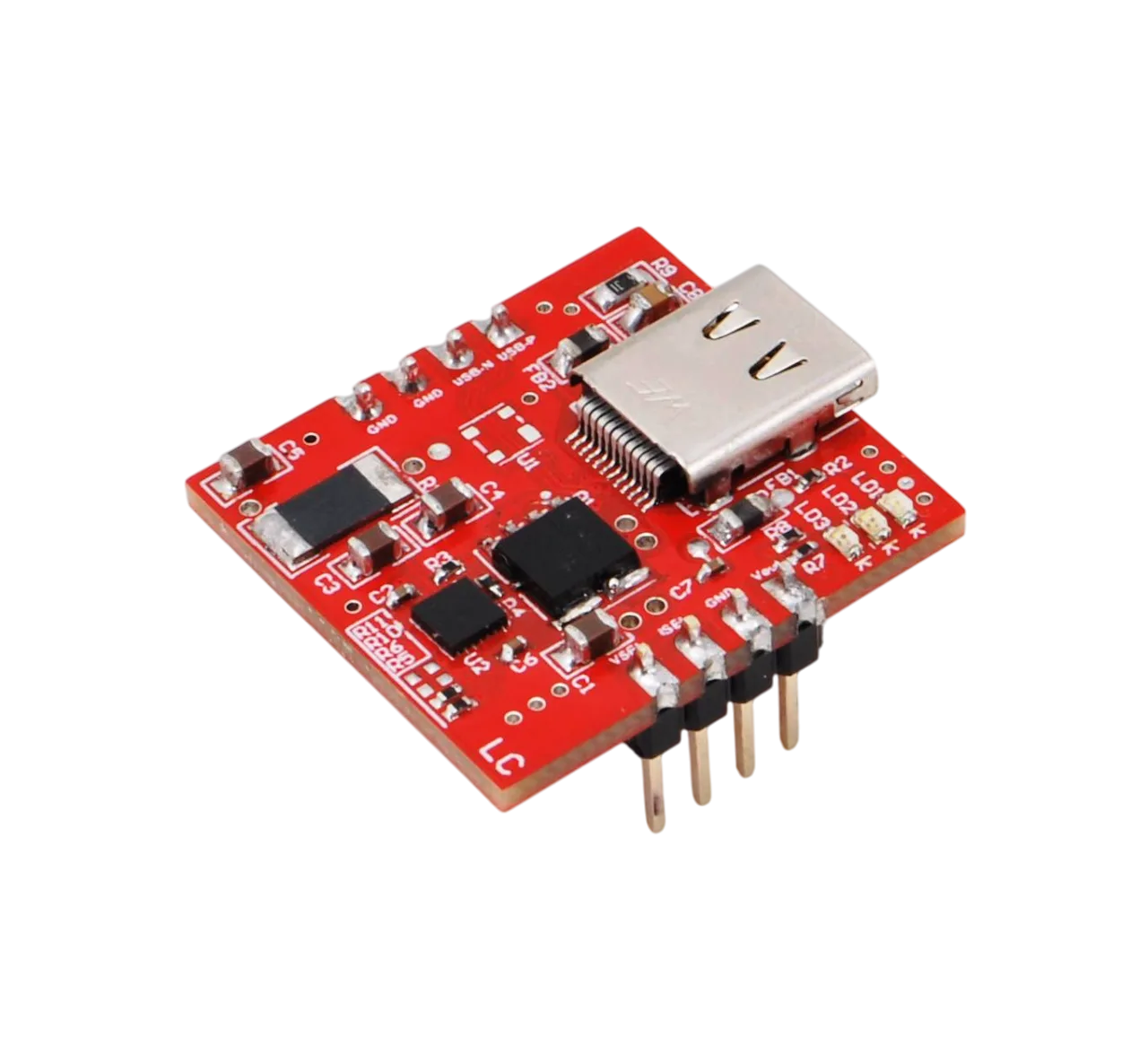
SKU 7100-FT1769MEAN 8057190730158Output voltage: PD (Power Delivery)Item type: AssembledConversion type: Step-downDC/DC converters
Description
Harness the maximum power offered by the USB Type-C standard for your high-energy-demand projects.
The USB Power Delivery Breakout Board is the definitive plug-and-play solution for powering your devices (such as Raspberry Pi, embedded boards, or high-current loads) with up to 100W. Based on the innovative AP33771CFBZ-13-FA01 controller from Diodes, this board acts as a “Sink Controller,” automatically negotiating the voltage and current profile with any compatible USB-C PD power supply.
The main advantage is ease of use: unlike other controllers that require a microcontroller and complex code, this board handles the entire negotiation autonomously. You just need to configure it with two simple resistors to get exactly the power you want.
Note: The resistors for voltage/current configuration are not included with the product.
Operating Modes
Intuitive Configuration
Using the board is extremely simple and requires no programming. To set the voltage and current requested from the charger:
Choose the Profile: Decide the Voltage/Current combination (e.g., 5V@1A, 9V@1.5A, 20V@3A) best suited to your load.
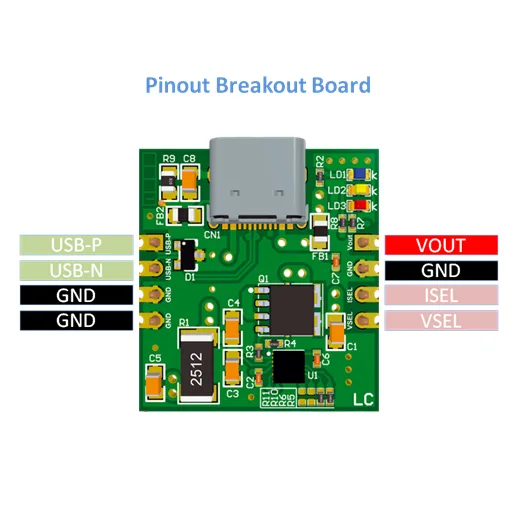
Connect the Resistors: Connect precision resistors (at least 1%) to the dedicated VSEL and ISEL pins on the board’s CN3 connector.
Power Up and Negotiate: Once the USB-C PD source is connected, the IC will automatically send the power request based on the resistor values. The status LED will confirm the success of the negotiation.
Tips for High Currents
For applications requiring high currents (such as 3A or 4A), it is recommended to negotiate a higher supply voltage (for example +9V or +15V). This approach helps compensate for the natural voltage drop that occurs along the USB-C cable, ensuring that your project’s electronics always receive the minimum voltage necessary for proper operation. The current draw should not exceed 4A for optimal and safe operation. Choose a Type-C cable rated at least 100W.
Quick Diagnostics (LED)
The built-in LEDs give you immediate feedback on status:
- Blue LED: Indicates the presence of VBUS voltage.
- Red LED (Negotiation Status): Indicates success (cyclic brightness change) or error (blinking for OVP/OCP/UVP/OTP protection issues, or steady light for failure to match the requested profile).
- Yellow LED (FLIP): Tells you if the USB Type-C cable has been inserted upside down.
Choosing VSEL and ISEL

To determine the required voltage and current, resistors must be connected to the VSEL and ISEL pins. The resistors must have a precision of at least 1%, and up to eight different cases are supported. The table highlights the possible supported combinations, but be careful to refer to the included instructions for choosing the correct resistors.
Voltage-Current Relationship

Relationship between the supply voltage selected during negotiation and the maximum current/power deliverable by the source. As can be seen, to get maximum power, i.e., 100W, you must negotiate a supply voltage of 20V at a maximum limit of 5A, otherwise you cannot reach 100W of delivered power. With only 5V supply, you can reach a maximum of 15W. The graph shows 4 possible negotiable supply voltages: +5V, +9V, +15V, and +20V.
Technical Specifications
- Voltage and Current Selection (No Microcontroller): The desired power profile (VSEL and ISEL) is set using external precision resistors.
- EPR Support: Compatible with Extended Power Range (EPR) mode to negotiate voltages up to 20V.
- Complete Protections: Built-in safety mechanisms including:
- OVP (Over Voltage Protection).
- UVP (Under Voltage Protection).
- OCP (Over Current Protection).
- OTP (Over Temperature Protection).
- Visual Feedback: Equipped with a status LED to monitor power negotiation and a FLIP LED to indicate correct cable orientation.
Documentation
Technical details
| Maximum Power | Up to 100W (20V @ 5A) in SPR (Standard Power Range) mode |
|---|---|
| Integrated Controller | Diodes AP33771CFBZ-13-FA01 chip (USB Type-C PD 3.1 Sink Controller) |
Related products
-
 DC/DC converters
 -
 DC/DC converters
 -
 DC/DC converters
 -
 DC/DC converters
 -
 DC/DC converters
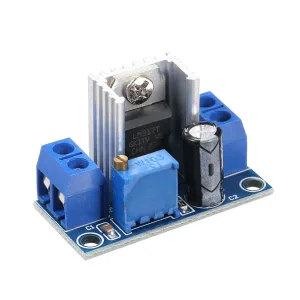
DC/DC Module with LM317 Voltage Regulator – Adjustable Output 1.2-37V
€2.30excl. VAT€2.80incl. VAT -
 DC/DC converters
 -
 DC/DC converters
 -
 DC/DC converters