
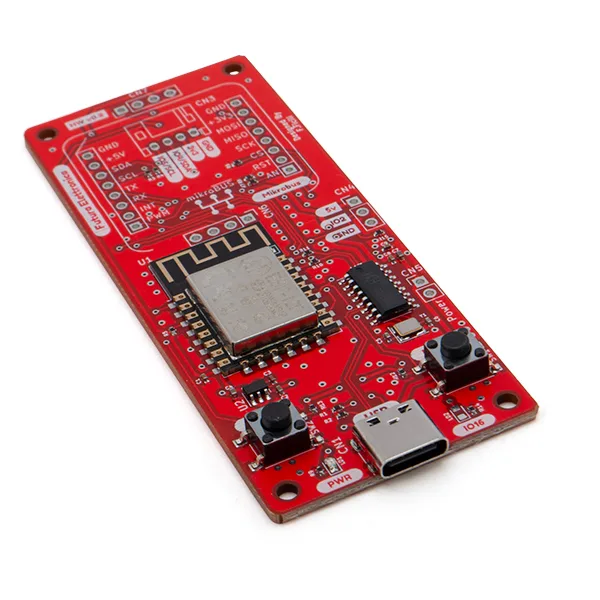
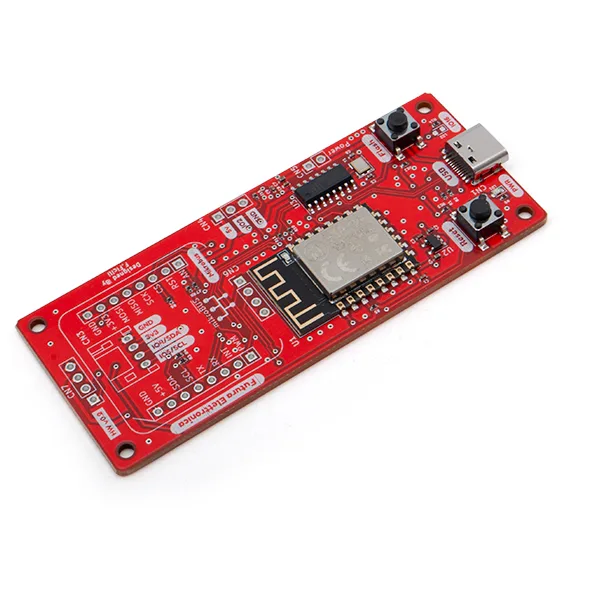
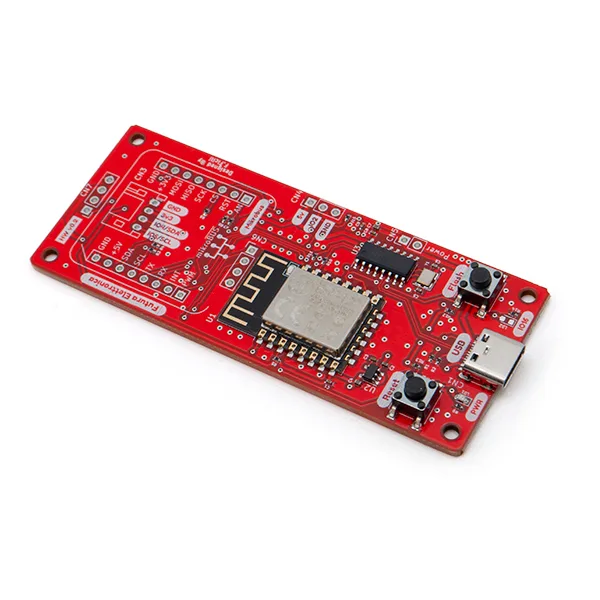
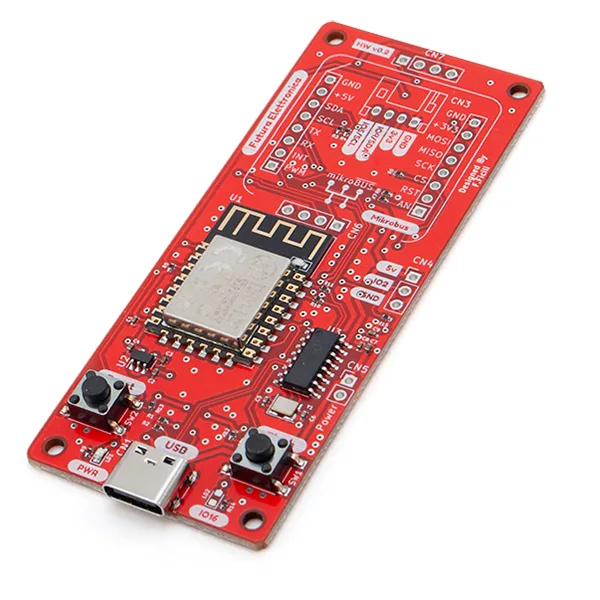
GANIMEDE.E12 ESP12 Board with USB, Wi-Fi, mikroBus and Grove Sockets
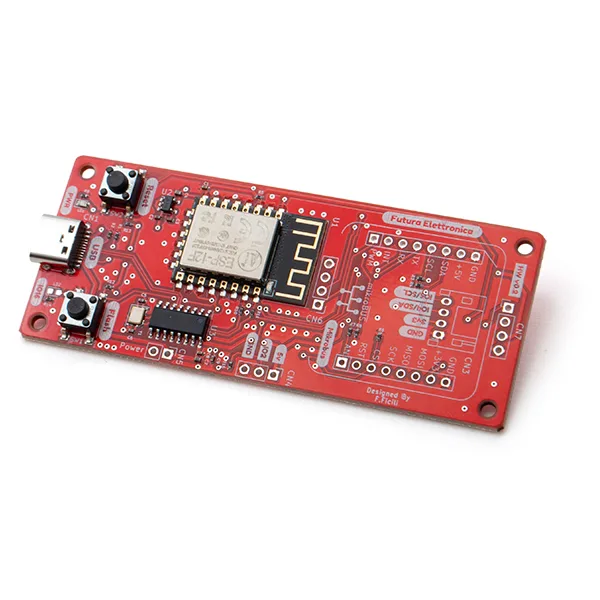
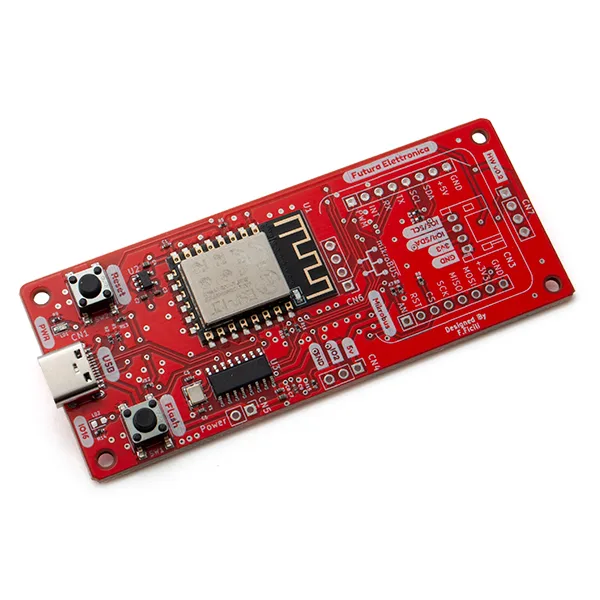
SKU 7305-GANIMEDE-E12EAN 8219671075350Item type: Assembled, BoardESP8266 / ESP32, Robotics & development
Description
|
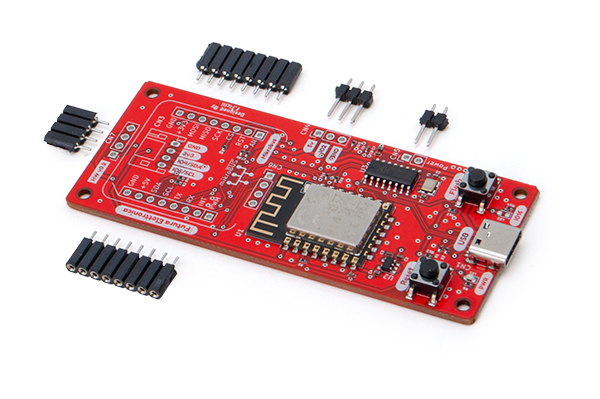
The Ganimede development board is a versatile, low-cost solution built around the ESP12 module made by AI-Thinker. The board provides hardware interfacing to the Mikroelektronika MikroBus (Click Boards) and SeedStudio Grove standards, which makes it compatible with a wide range of breakout boards available on the market. Every board also has a USB Type-C port for programming, debugging and interfacing to a host PC, a connector for NeoPixel and 1-Wire interfacing, and one for a 0.96’’ I²C-Bus OLED display. The ESP8266 SoC includes QSPI Flash memory and an on-board Wi-Fi antenna, giving you a complete wireless connectivity solution. Thanks to its flexibility and its many features, the Ganimede development board is ideal for building Internet of Things (IoT) projects and wireless applications. Ganimede can be programmed in a variety of languages, all of them perfectly capable. For anyone getting started, MicroPython is certainly the ideal choice: an environment that is easy to learn yet surprisingly powerful. A detailed description of the steps needed to install the MicroPython environment, together with a set of examples, can be found in the Python section of the board GitHub repository: If you are a maker, a developer or a hobbyist looking for a simple, effective way to build IoT projects, the Ganimede development board is the ideal choice. GANIMEDE.E12 is supplied with four different types of header strip: The 4-way connector for the Grove system is sold separately ( see the related products ) |
|
|
| The MicroPython programming language |
MicroPython is an open source programming language that aims to provide a leaner, smaller version of Python for microcontrollers and other embedded devices. MicroPython was designed to be efficient in both memory and speed on embedded devices, which makes it an excellent choice for IoT (Internet of Things) projects. One of the most attractive features of MicroPython is its compatibility with the Python language, which makes it accessible to the many people already familiar with Python. That means developers can carry over most of the knowledge  they gained with Python to MicroPython as well. MicroPython has many applications in the IoT field. It can be used to build embedded devices such as environmental sensors, home automation systems, security devices and much more. It also offers a wide range of built-in libraries covering many basic functions, such as Wi-Fi connection, network protocol handling, memory management, building graphical interfaces and much more. The MicroPython port for the ESP8266 offers a simple, convenient way to program the ESP-12 module based on the ESP8266 and was designed to provide a complete, integrated solution for programming IoT projects in MicroPython. The ESP8266 port also offers an integrated development environment that includes a REPL (Read-Eval-Print Loop) interface, a built-in code editor and many other features that make a developer life easier. they gained with Python to MicroPython as well. MicroPython has many applications in the IoT field. It can be used to build embedded devices such as environmental sensors, home automation systems, security devices and much more. It also offers a wide range of built-in libraries covering many basic functions, such as Wi-Fi connection, network protocol handling, memory management, building graphical interfaces and much more. The MicroPython port for the ESP8266 offers a simple, convenient way to program the ESP-12 module based on the ESP8266 and was designed to provide a complete, integrated solution for programming IoT projects in MicroPython. The ESP8266 port also offers an integrated development environment that includes a REPL (Read-Eval-Print Loop) interface, a built-in code editor and many other features that make a developer life easier. |
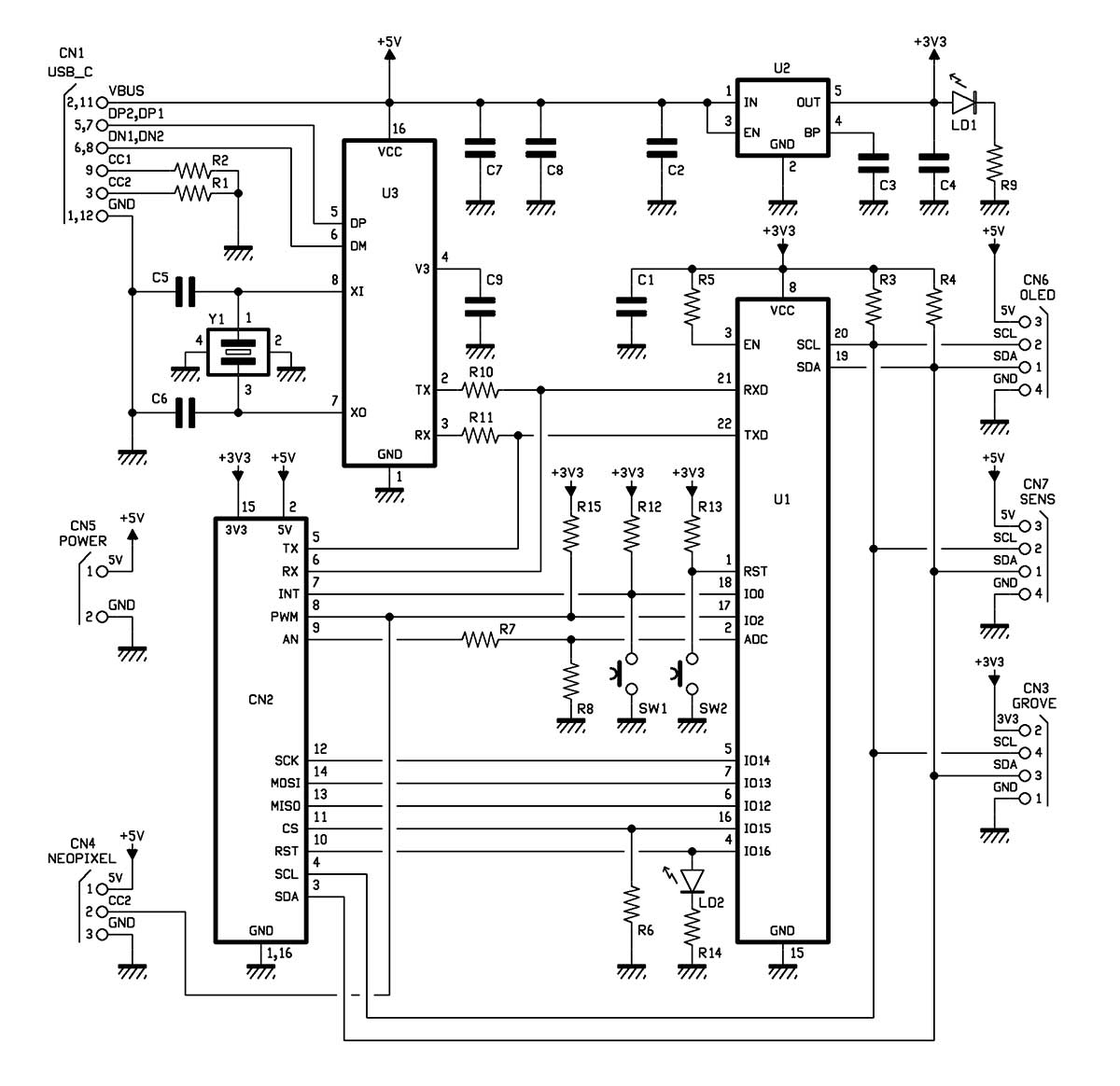
| Circuit diagram |
|
|
| The mikroBus and SeedStudio Grove standards |
| The two expansion connectors on the Ganimede.E12 that open up the most possibilities are CN2 and CN3, which provide the Mikrobus and Grove interfaces respectively. Let us look at these two standards in more detail.
MikroBus is a hardware connectivity standard for microcontrollers and embedded devices, developed by the Serbian company Mikroelektronica. It was designed to provide a simple, convenient way to connect sensors, actuators and other components to microcontrollers of all kinds. The standard is based on a connector (or socket) with a standardised pin-out, shown in the figure below.
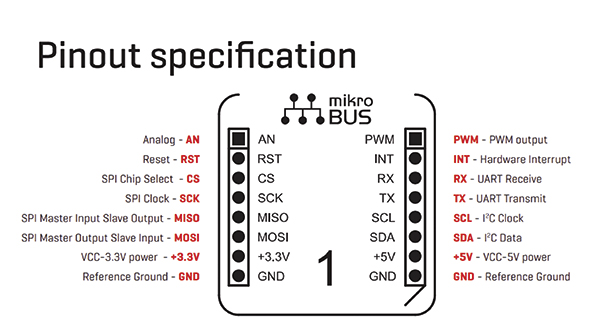 The best known products using the standard are the Click line of boards, also made by Mikroelektronica, of which more than 1,000 different variants are on the market, each with its own function and its own hardware. The specification of the standard is open source and available at the following web address: https://download.mikroe.com/documents/standards/mikrobus/mikrobus-standard-specification-v200.pdf. The specification allows other board manufacturers to use it in their own hardware, or even to contribute to the design of new devices. Grove is another very widespread standard in the hobbyist/maker world, created by SeedStudio. It is another hardware expansion standard but, unlike MikroBus, which uses a 16-way socket and breakouts fitted with matching connectors (so the boards plug straight into the socket), it uses a standard 4-way connector *** and breakouts connected by cable. The 4 pins of the standard Grove connector carry power and signals, and the signal pins are wired differently depending on the type of board connected: • pin 1 – Yellow – Signal 1; may be I²C bus SCL, Digital I/O, Analog or UART RX depending on the board connected; *** The 4-way connector for the Grove system is sold separately ( see the related products ) Here too there is a wide range of devices, roughly 200-300 of them, that can be connected to our Ganimede board. More information can be found at the following web address: https://wiki.seeedstudio.com/Grove_System/.
|
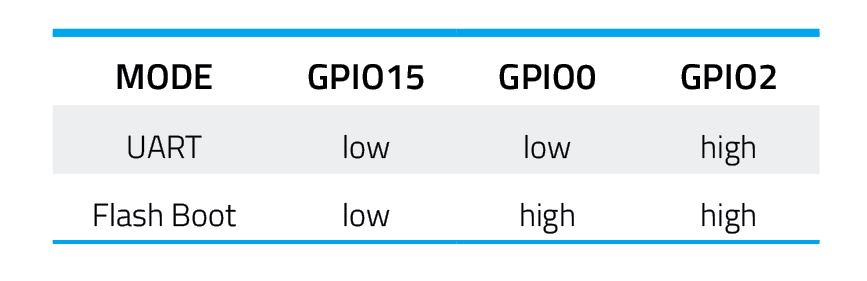
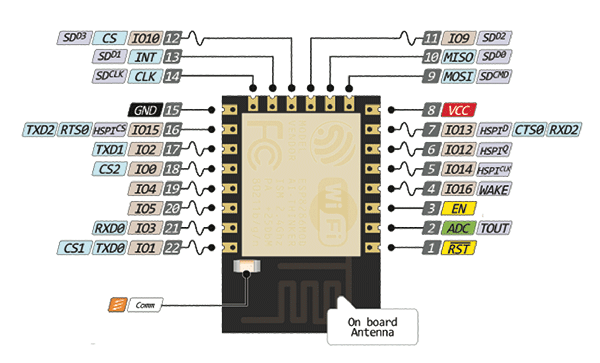
| State of GPIO 0, 2 and 15 to select the two boot modes of the ESP-12 module |
 |
| The ESP12 module and the ESP8266 SoC |
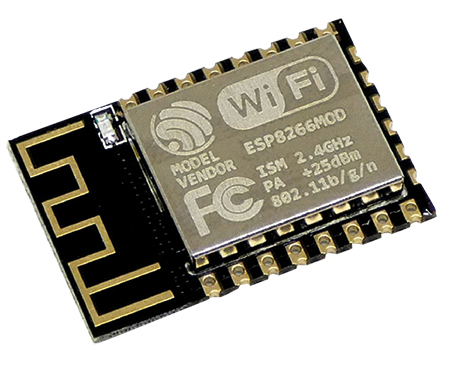
| The ESP-12 module is a development board based on the ESP8266 System-on-Chip (SoC) made by Espressif Systems. This small board was designed to provide a compact, low-cost way of building Internet-connected devices. The ESP8266 SoC is a low-cost microcontroller that integrates a 32 bit processor based on the Tensilica Xtensa LX106 core, a Wi-Fi module, flash memory and a set of I/O peripherals.
These features make it an excellent solution for building Internet-connected devices such as remote sensors, home automation devices and IoT (Internet of Things) products. The ESP8266 SoC has a UART interface, an ADC module, an SPI module, an I²C module, a set of GPIOs and a PWM module. These interfaces let you connect the ESP-12 module to all sorts of sensors and external devices to build projects of every kind. The ESP8266 supports several network protocols such as TCP/IP, HTTP, DNS, DHCP, UDP and many more, which makes it a versatile Wi-Fi connectivity solution. On the programming side, the ESP8266 can be programmed in C/C++ as well as in scripting languages such as LUA, uPython and JavaScript, putting it within reach of a wide range of developers. The SoC also supports various integrated development environments, such as the Arduino IDE and PlatformIO, real-time operating systems such as FreRTOS and various frameworks, including the popular NodeMCU and Tasmota development frameworks. In short, the ESP-12 module is a low-cost, compact way to build Internet-connected devices, making the most of the powerful features of the ESP8266 SoC. Thanks to its versatility and the wide range of peripherals available, the ESP-12 module is an ideal choice for many product development projects |
|
|
You may also like…
-
 Microchip
Related products
-
 ESP8266 / ESP32
 -
 Wi-Fi modules
 -
 ESP8266 / ESP32
 -
 ESP8266 / ESP32
 -
 ESP8266 / ESP32
 -
 ESP8266 / ESP32
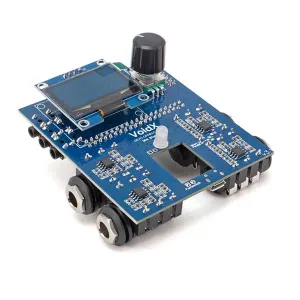
Mini Stomp-X Dev-Board – Demo Board for the VoidX-DSPModule
€31.97excl. VAT€39.00incl. VAT -
 ESP8266 / ESP32
 -
 ESP8266 / ESP32