
WiFi Solar Microinverter for Direct Grid Feed-in – 600 Watt
SKU 8100-FR861EAN 8219671117272Item type: AssembledSolar accessories, Solar charge controllers
Description
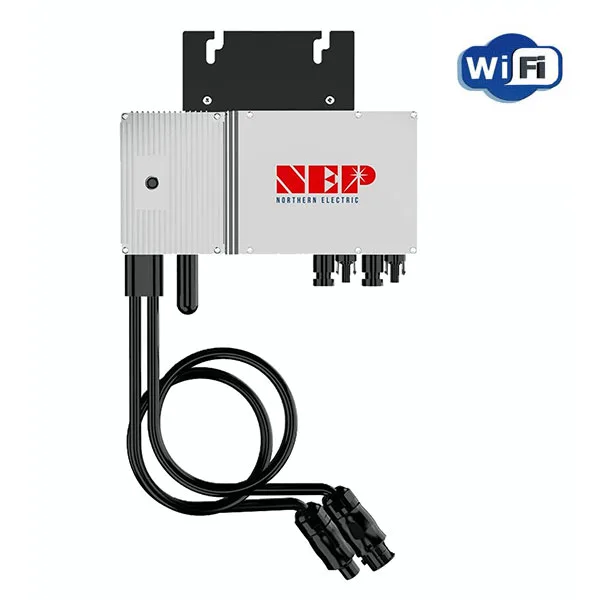
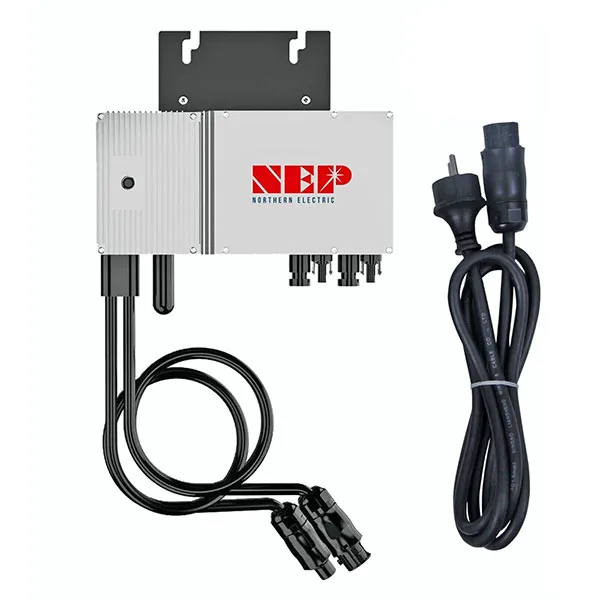
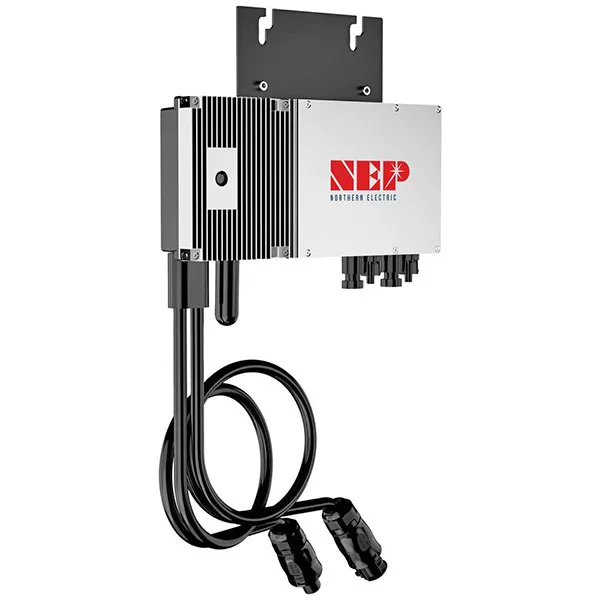
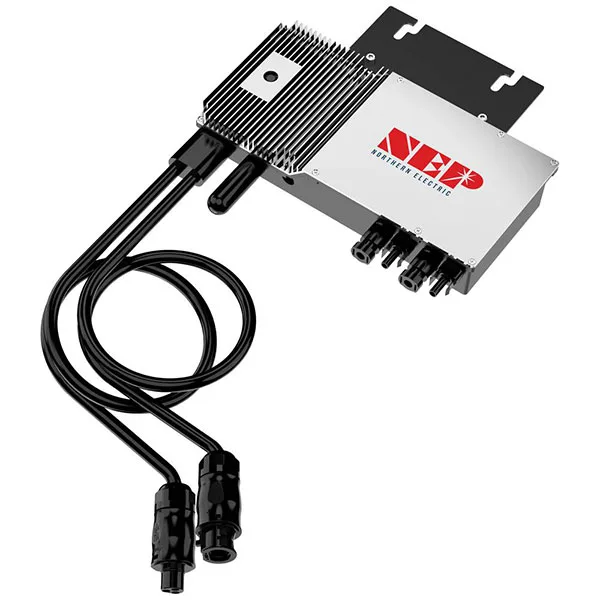
| This 600-watt (900W peak) grid-tie WiFi solar microinverter for direct grid feed-in is a device designed to deliver excellent performance in converting solar energy into usable electrical energy.
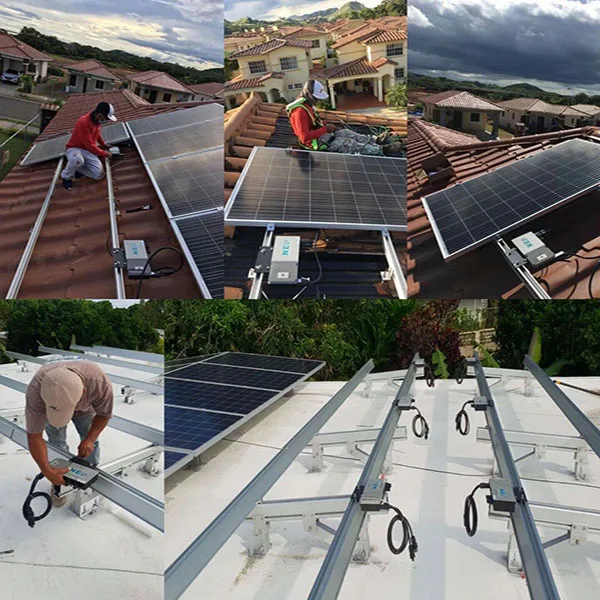
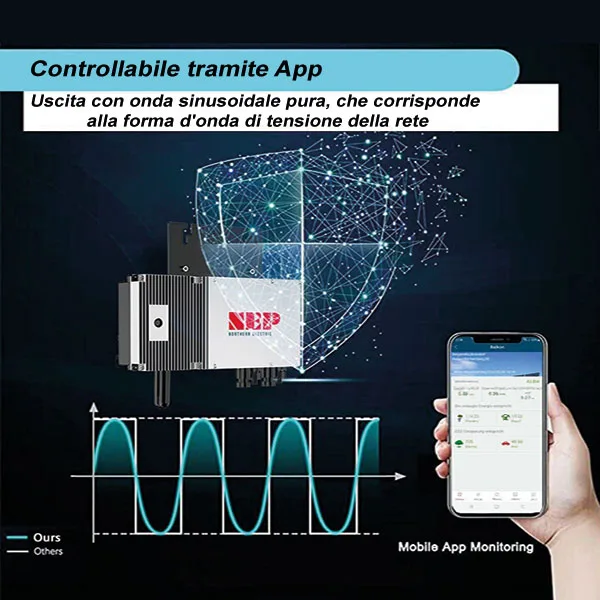
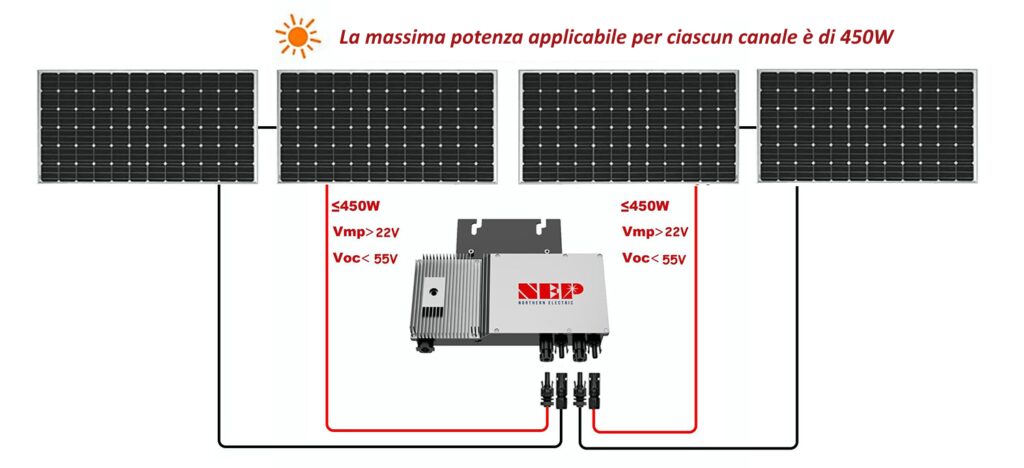
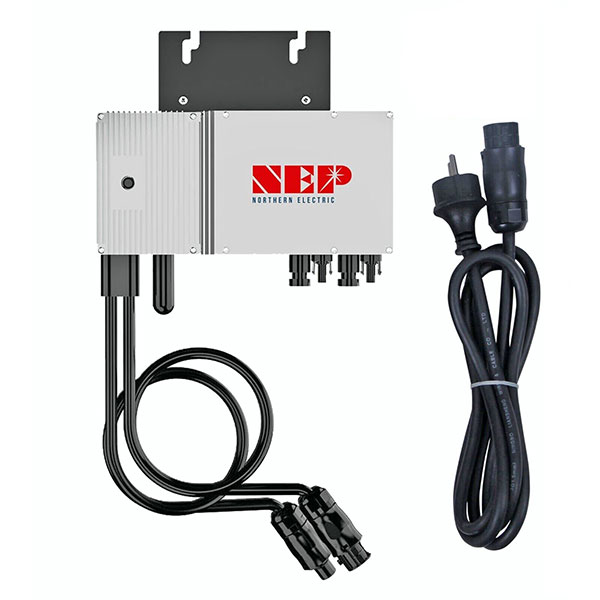
This “Plug&Play” type inverter is ideal for building residential mini photovoltaic systems, where you want to feed the solar energy produced directly into the grid, thereby reducing the energy drawn from the grid. Complying with the CEI 0-21 standard, when combined with solar panels of adequate power and an upstream protection system, it is, for example, suitable for a balcony installation. With a maximum peak power of 450 watts per channel (two channels available), this microinverter can handle high levels of solar power. In addition, thanks to its built-in WiFi connectivity, the microinverter can be monitored and controlled via a free app (NEPViewer), allowing simple and intuitive management of the photovoltaic system. Equipped with advanced protections such as over/undervoltage protection, over/underfrequency protection, and anti-islanding protection, the microinverter ensures safe and reliable operation in various environmental conditions. This inverter operates only when grid voltage supplied by your grid operator is present. Its sturdy construction and IP67/IP66 protection rating ensure resistance to weather and long-term durability. In addition, with an operating temperature range from -40°C to +65°C, the microinverter is suitable for both indoor and outdoor use, offering flexibility in installation. The microinverter is supplied with a 5-meter power cable. This inverter can be paired with our 12V solar panels (2 per channel to obtain 24V); for example, using two 200W panels per input, you can achieve a total power of 800W. |
 |
| Main features |
|
| Technical specifications |
|
| Package contents |
|
 |
| In-depth look |
| Types of Plug&Play systems Mini photovoltaic systems typically consist of 1 or 2 solar panels and are equipped with a built-in inverter that produces alternating current, which can be fed directly into the home’s electrical grid to power appliances and devices. The meter supplied by the utility must be a bidirectional type. The solar panels used are the same ones used for residential systems of 3kWp, 4.5kWp, or 6kWp; the inverters are also identical but smaller, and are known in the trade as microinverters. So we are talking about fully-fledged photovoltaic systems, connected to the home grid and capable of producing current at 230 V, able to power any household appliance. When talking about mini photovoltaic systems in general, this refers to a power below 800 W (to comply with the law), which does not require any landscape or installation permit, but only a simple notice (single communication) to the local electricity distributor. We can make a further distinction between apartment photovoltaic systems: – Plug&Play photovoltaic: when the power is below 350W – Mini photovoltaic: when the power is between 350 W and 800 W Although, in common usage, the two terms are often used as synonyms, and the term “Plug&Play” is used to identify all systems with less than 800 W of power that connect to the home system via a simple electrical outlet. Productivity, of course, also depends on the installation (south-facing exposure, tilt, shading) and the region of installation, although productivity variations are minimal from north to south (+/- 10%).What is the difference between a plug and play photovoltaic system and a standard photovoltaic system? A Plug&Play system is pre-assembled and ready for installation. It does not require assembling components, so there’s no need to worry about whether you have all the right parts or need any permits. Just position the panel and any mounting brackets.A standard photovoltaic system, on the other hand, requires the components to be assembled before installation. The advantage is that with a standard system you can customize the installation based on the amount of electricity needed and the position of the panels. The disadvantage is that standard systems are far more expensive than plug-and-play options, because they involve higher labor costs to assemble them correctly before installation, and require binding permits, as well as suitable space to position all the necessary panels. A standard system can cover a home’s entire energy needs (if correctly sized); a Plug&Play system, on the other hand, can only help optimize consumption and reduce the weight of your bills.How to send notice to your utility If you build a system meeting the specifications of the CEI 0-21 standard, you will be required to send a “Single Communication” to your electricity grid operator, in order to activate on-site exchange and correctly account for the energy fed into and drawn from the operator’s grid. Using this form (available in the area below), you declare, under your own responsibility, that the system complies with current regulations. To find out the correct procedure for submitting the declaration, contact your grid operator. |
| Downloads and useful links |
Technical details
| Recommended maximum peak power | 450 Wp x 2 |
|---|---|
| Maximum open-circuit DC voltage | 60 Vdc |
| Isc (PV) short-circuit current | 18 Adc x 2 |
| AC output peak power | 550 Wp |
| Rated AC output power | 500 Wp |
| THD (Total Harmonic Distortion) | <3% (at rated power) |
| Rated frequency | 50Hz |
| Maximum output fault current (Aac) | 4.4 A peak |
| Weighted average efficiency (CEC) | 95.50% |
| Night-time tare loss (Wp) | 0.11 |
| Over/undervoltage protection | YES |
| Over/underfrequency protection | YES |
| Anti-Islanding protection | YES |
| Overcurrent protection | YES |
Related products
-
 Solar accessories
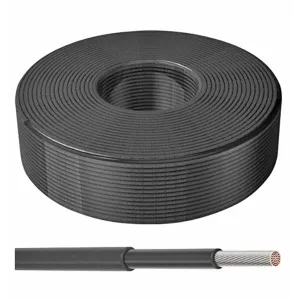
H1Z2Z2-K Solar Cable 6mm², 1500V, Black – 1 m with Double XLPE Insulation
€2.46excl. VAT€3.00incl. VAT -
 Solar accessories
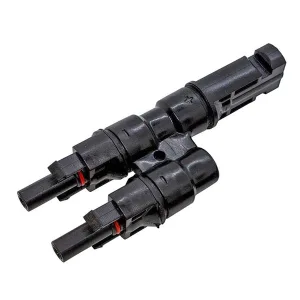
MC4 Branch Connector 1M/2F for Parallel Solar Panel Connections
€3.69excl. VAT€4.50incl. VAT -
 Solar accessories
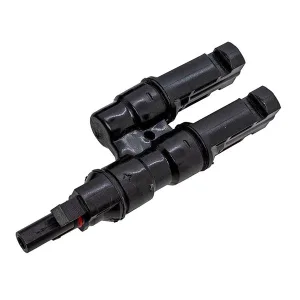
MC4 Branch Connector 2M/1F for Parallel Connection of Solar Panels
€3.69excl. VAT€4.50incl. VAT -
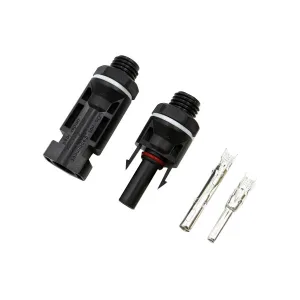 Solar accessories
 -
 Solar charge controllers
PWM Charge Controller for Solar Panels 12/24V
Price range: €18.00 through €35.00 incl. VAT -
 Solar charge controllers
PWM Solar Charge Controller 12/24V 30A with LCD Display and USB
€26.23excl. VAT€32.00incl. VAT -
 Solar charge controllers
 -
Sale!
 Solar charge controllers