
CAN HAT for Raspberry Pi
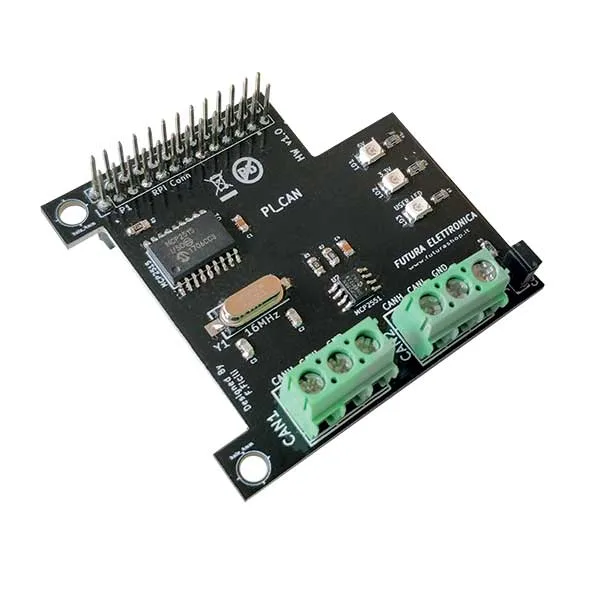
SKU 7100-CANHATEAN 8219671113014Item type: Assembled, Shields & add-onsRaspberry Pi
Description
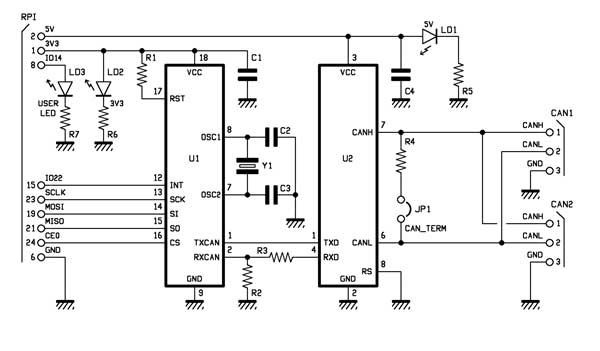
Based on the MCP2515 chip (CAN controller) and the MCP2551 (high-speed CAN transceiver) from Microchip, this shield allows a Raspberry Pi to interface with CAN-bus devices. Combined with the versatility of the Raspberry Pi, the HAT can be used in a multitude of practical cases, from automotive applications (where CAN Bus has been widely used for many years) to home automation and industrial automation at various levels. It is supplied fully assembled and tested.
The CAN Protocol
The CAN (Controller Area Network) protocol was created by Robert Bosch GmbH in the 1980s, with the idea of creating a multicast standard for short-range serial communications between different electronic units, characterized by high immunity to interference, low cost, and high reliability, mainly for automotive applications, where it currently constitutes the main communication bus used for the classic “domains” (body, chassis, powertrain). This standard is now also spreading beyond automotive, starting to penetrate sectors such as industrial automation and control, monitoring, and aerospace. Examples of protocol extensions to other fields of application are CANopen for the industrial sector and CANaerospace for the aerospace sector. From a transmission point of view, CAN uses a balanced potential difference line, like RS-485. Data is transmitted according to a model based on “dominant” bits (logical 0) and “recessive” bits (logical 1). If one node transmits a dominant bit and another a recessive bit, then the dominant bit “wins” between the two, and the transmitter of the recessive bit is able to detect this situation (collision). This allows transmitters to self-exclude from the network if such a situation is detected, so as not to generate disturbances (this phase is commonly referred to as the arbitration phase). The bus supports various data rates, but the standard defines an upper limit of 1 Mbit. By appropriately lowering the data rate, it is possible to reach even very long distances, making CAN a bus also suitable for field applications (see Table 1). Currently, the automotive industry is beginning to experiment with alternative technologies to CAN for implementing future vehicle communication buses; the Ethernet standard, in the BroadR-Reach variant, is one of the most promising candidates to replace CAN in this type of application. However, it is easy to imagine that the migration to such technologies will be a far from fast process; in fact, the CAN standard is still being updated today to allow it to continue to meet the requirements of the most modern applications, which demand ever-higher performance, especially in terms of bandwidth; indeed, a recent extension of the protocol, called CAN-FD (CAN with Flexible Data-Rate), allows, through complex frequency-switching techniques, to increase the CAN bandwidth from 1 to 8 Mbit, while maintaining backward compatibility with version 2.0B, the latest official release of the standard.
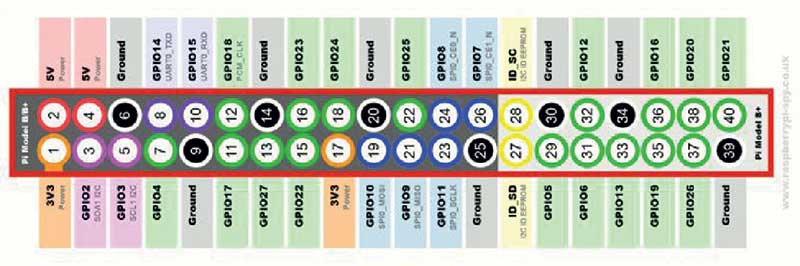
Raspberry Pi 40-Pin GPIO Connector
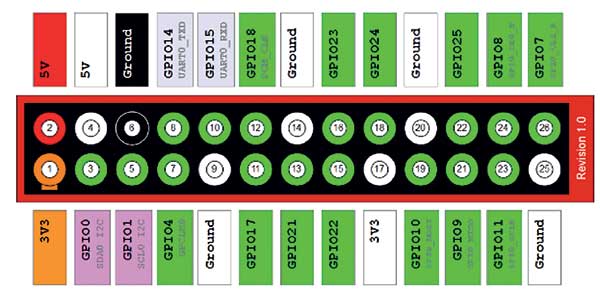
The Shield’s 26-Pin GPIO Connector
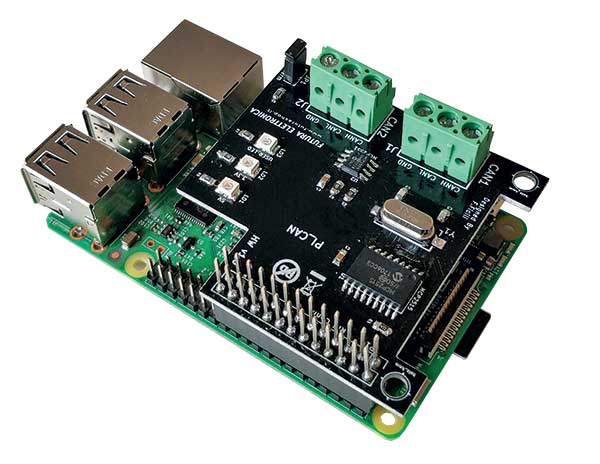
The Shield Mounted on a Raspberry Pi 3 B+ (not included)
Electrical Schematic
You may also like…
-
 Raspberry Pi
 -
 Raspberry Pi
 -
 Raspberry Pi
 -
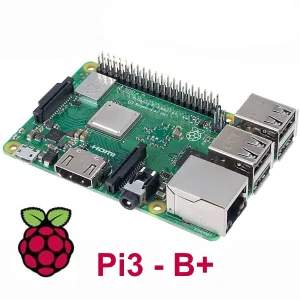 Raspberry Pi
 -
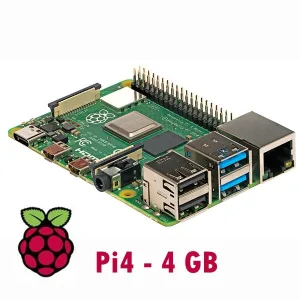 Raspberry Pi
Related products
-
 Lab cables
 -
 Displays
 -
 Raspberry Pi
 -
 Mains power supplies
 -
 Raspberry Pi
 -
 Development systems
 -
 Accessories
 -
 Raspberry Pi