
LDR Photoresistor Light Sensor Module
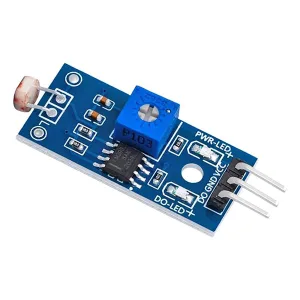
€1.56excl. VAT€1.90incl. VAT3-pin LDR light sensor module with digital output, compact and adjustable, ideal for Arduino and automatic dusk switches.
Counts based on the first 4198 matches.
 Sensors
3-pin LDR light sensor module with digital output, compact and adjustable, ideal for Arduino and automatic dusk switches.
 Sensors
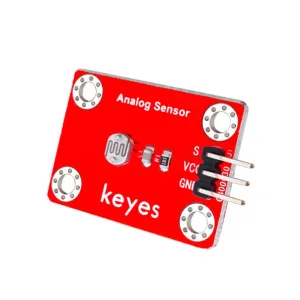
Analogue sensor with a light-dependent resistor and a 3-pin output connector, 2.54 mm pitch.
 Sensors
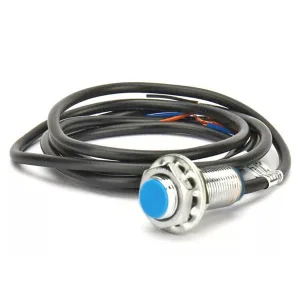
This Hall effect switch, magnet included, is ideal for applications that call for accurate, dependable detection of position, movement or the presence of a magnetic field. Powered from 5 to 30VDC, it has an NPN output and a compact M12 x 30 mm body. Perfect for automation systems and industrial applications, it performs well across a wide range of operating conditions.
 Sensors
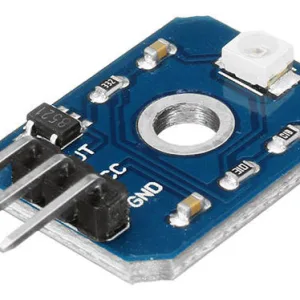
Compact module with a sensor that measures the UV index of sunlight, lamps or other sources with a wavelength between 200 nm and 370 nm
 Sensors
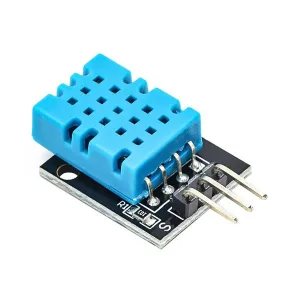
Three-pin output module with DHT11 sensor
 Sensors
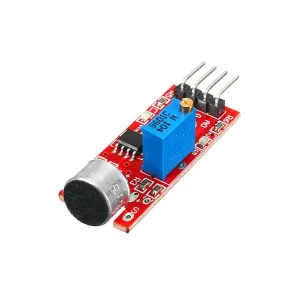
Module with a microphone that senses the sound level of its surroundings
 Sensors
 Sensors
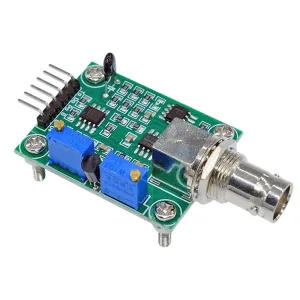
Module for measuring the pH level and the temperature of a water-based solution.
 Sensors
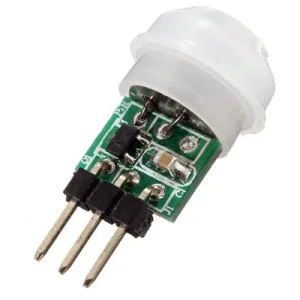
Ultra-compact little module with a miniature PIR sensor, control board and an output to be interfaced to a microcontroller, Arduino and the like (high level 3 V – low 0 V)
 Sensors
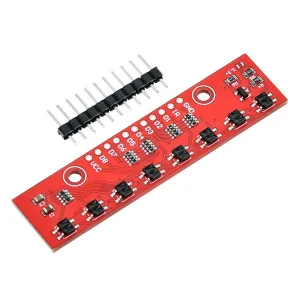
Module with 8 reflective sensors, each made up of an infrared emitting diode and a phototransistor
 Sensors
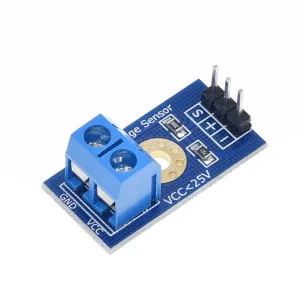
Built around a voltage divider with two resistors, this voltage sensor scales the incoming voltage down by a factor of 5
 Sensors
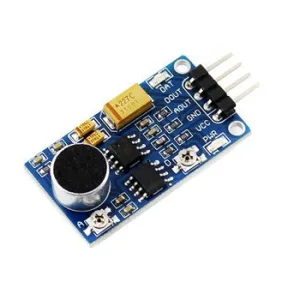
Fitted with a microphone, an audio signal amplifier IC (LM386), a sensitivity adjustment trimmer, analogue and digital outputs and an output signal indicator LED, this small module lets you measure the sound level in the surrounding environment
 Sensors
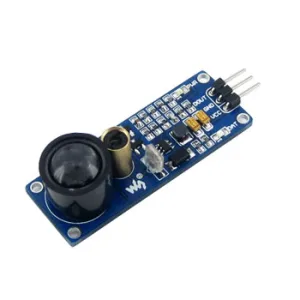
This compact module uses a LASER as the transmitter and a phototransistor as the receiver. The beam emitted by the transmitter is reflected by the surface in front of it and hits the lens of the receiver (the lens focuses the reflected light onto the phototransistor), turning the phototransistor on
 Sensors
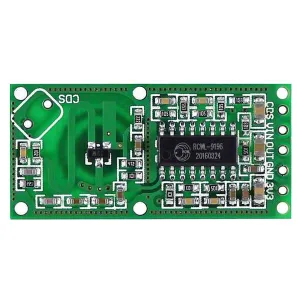
The RCWL-0516 is a small, compact microwave motion sensor based on the Doppler effect
 Sensors
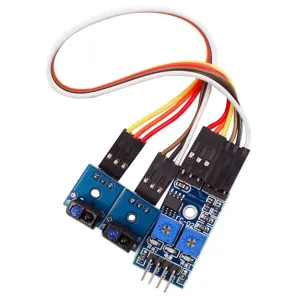
Set made up of two TCRT5000 reflective sensors and a small control board based on the LM393 chip. When one of the sensors comes close to a light-coloured object, the strength of the received signal rises and the LED on the control board turns red (digital output high)
 Sensors
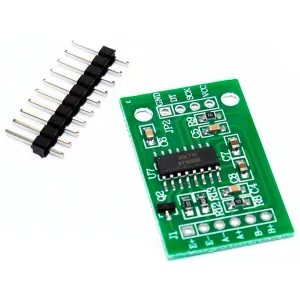
Board built around the HX711 chip, a 24-bit analogue-to-digital converter designed to interface a load cell with a microcontroller such as Arduino, Fishino or compatible boards
 Sensors
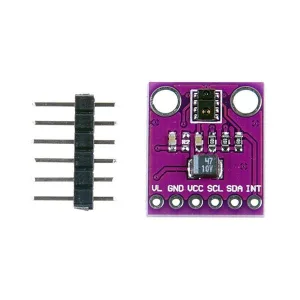
Breakout board built around the Avago APDS-9930 ambient light sensor (ALS) and proximity sensor with infrared LED
 Sensors
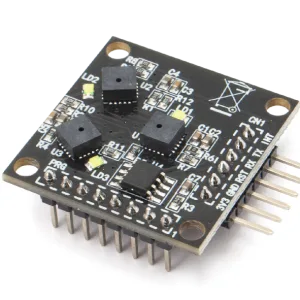
Breakout board based on the AMS AS72651, AS72652 and AS72653 light sensors
 Sensors
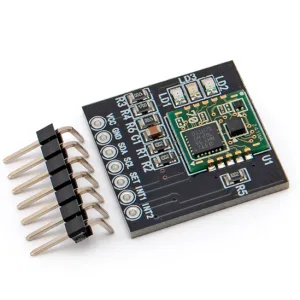
Breakout board built around the Omron D7S, the smallest seismic sensor in the world. The D7S contains a three-axis accelerometer, of which only two axes are used while an earthquake is being detected; they can be selected by the user or automatically, according to how the sensor is tilted.
 Sensors
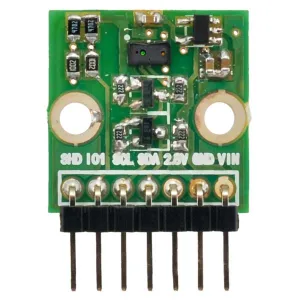
Breakout board based on Time of Flight technology, carrying the VL53L0X sensor, a low drop-out linear voltage regulator and a MOSFET adapter for the I²C-Bus interface, used to shift the chip’s 0/2.8 V logic levels so that they match the standard TTL levels of conventional logic boards and of Arduino. Communication with the host device, typically a microcontroller, takes place over the I²C-Bus formed by the SCL and SDA pins, clock and bidirectional data channel respectively; through the bus (which runs at 400 kHz) you can set the operating mode, the sensitivity and so on, as well as read the result of the measurement
Open-Electronics.org is the brainchild of a world leader in hobby electronics Futura Group srl. Open-Electronics.org is devoted to support development, hacking and playing with electronics: we share exciting open projects and create amazing products!
Open-Electronics.org is not just a container of ideas: it is also a web site lead by a team of engineers and geeks who will take part in the discussions and give support.
Our mission is to become a reference Open Source hacking site with ideas and feedback aimed to enrich the community.