
Joystick Module for M5FACESPOCKET
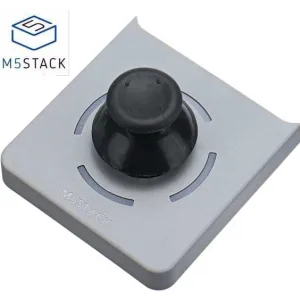
€12.30excl. VAT€15.00incl. VATBased on the ATmega328 microcontroller, this module features a mini joystick with knob, 12 RGB LEDs and I²C communication (address: 0x5E)
371 products
 ESP8266 / ESP32
Based on the ATmega328 microcontroller, this module features a mini joystick with knob, 12 RGB LEDs and I²C communication (address: 0x5E)
 STEM
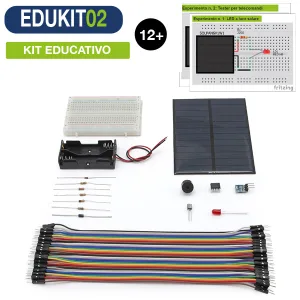
STEMDiscover our kit of 10 solar energy experiments. Graded by difficulty, they add up to a complete hands-on lesson. No soldering iron needed, so beginners can get started straight away and find out what solar energy can do.
 Arduino
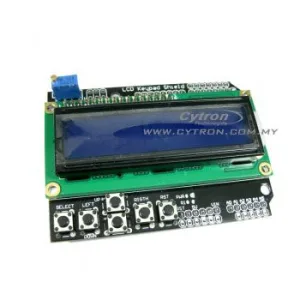
Shield for Arduino (Uno Rev3, Mega, Duemilanove and Leonardo) with a 16×2 LCD display, white characters, blue backlight, contrast trimmer, 6 buttons (Up, Down, Left, Right, Select and Reset) and pads for an ICSP connector
 Arduino compatible
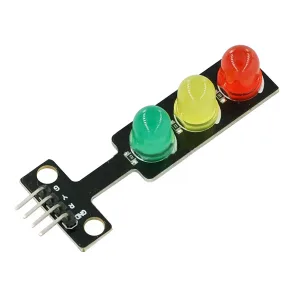
This high-brightness LED traffic light module is perfect for building miniature traffic lights and for educational and scientific projects. Compatible with Arduino and Raspberry Pi, it has three separately controllable LEDs (red, yellow and green), ideal for road signals and light-based alert systems.
 Arduino
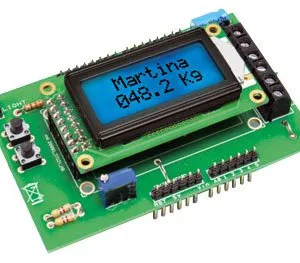
Designed to be paired with an Arduino board and a load cell (not included), it lets you build a scale that reads your weight. That reading can then be processed as you wish and shown on the on-board display.
 Raspberry Pi
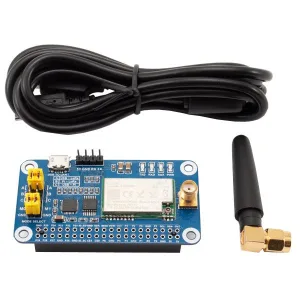
Designed to work with Raspberry Pi and based on the SX1268 module at 433 MHz, the LoRa HAT provides two-way data transmission up to 5 km over the serial port. It supports automatic retransmission, low-power modes such as deep sleep and Wake on Radio (ideal for battery-powered applications), wireless parameter configuration, RSSI signal strength indication and the LBT function, which can be used to avoid interference. It has a 40-pin GPIO connector for Raspberry Pi, a CP2102 chip for serial debugging, a UART control port for connecting host boards such as Arduino / STM32 and 4 status LEDs: UART RXD and TXD, AUX and PWR.
 Raspberry Pi
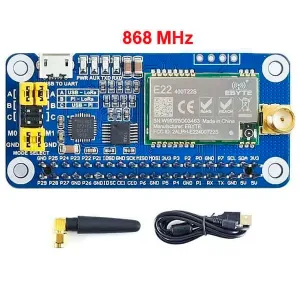
Designed to be used with Raspberry Pi and based on the SX1262 module at 868 MHz, this LoRa HAT provides two-way data transmission over a range of up to 5 km through the serial port. It supports automatic repeating, low-power features such as deep sleep and Wake on Radio (ideal for battery-powered applications), wireless parameter configuration, RSSI signal strength indication and the LBT function, which can be used to avoid interference. It features a 40-pin GPIO connector for Raspberry Pi, a CP2102 chip for serial debugging, a UART control port for connecting host boards such as Arduino / STM32 and 4 status LEDs: UART RXD and TXD, AUX and PWR.
 Arduino
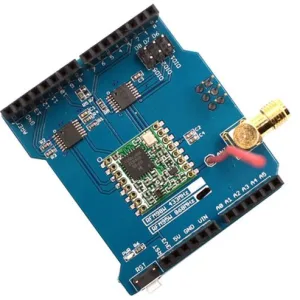
Based on the RFM95W transceiver module at 868 MHz, this shield for Arduino, Fishino and compatible boards (not included – see related products) provides long-range bidirectional data transmission using LoRa™ technology
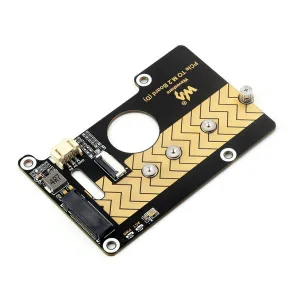 Raspberry Pi
PCIe-to-M.2 adapter board for Raspberry Pi 5, designed to connect high-speed NVMe SSDs through the PCIe interface.
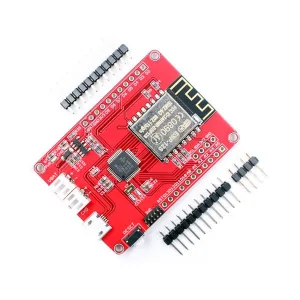 ESP8266 / ESP32
Maduino Zero ESP is an IoT (Internet of Things) solution based on the Atmel 32-bit SAMD21 microcontroller and on the ESP-12S Wi-Fi module built around the ESP8266 SoC (System on Chip). It complies with the 802.11 b/g/n standard at 2.4 GHz and features an integrated TCP/IP stack, 19.5 dBm output power, data interfaces (UART / HSPI / I2C / I2S / Ir Remote Control GPIO / PWM) and an on-board PCB antenna
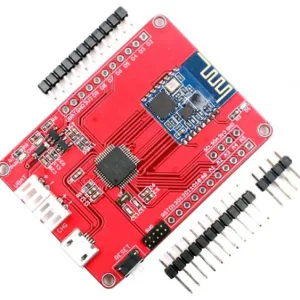 Arduino compatible
Maduino Zero HM-13 is an IoT (Internet of Things) solution built around Atmel’s 32-bit SAMD21 microcontroller and the HM-13 Bluetooth module. Programmable via the Arduino IDE, it features a data interface (UART / I2C / SPI), an on-PCB antenna, two pin headers exposing the SAMD21 microcontroller’s pins, a micro SD card slot, a micro USB connector for power and PC communication, a 3.7-volt input for connecting a lithium-polymer battery, a 5-volt input for connecting a solar panel to recharge the lithium-polymer battery, two status LEDs (for power and battery charging), and a reset button for the SAMD21 microcontroller. Dimensions (mm): 55×40.3×9, weight: 13 grams.
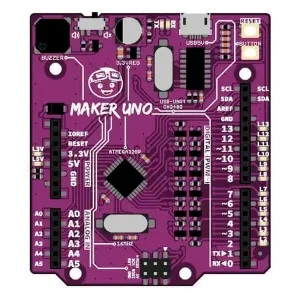 Arduino compatible
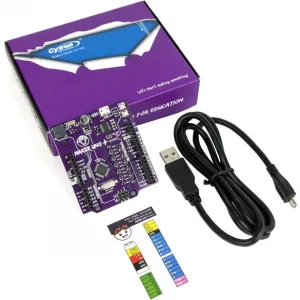
Maker UNO is a development board compatible with the Arduino UNO R3, an alternative and improved solution. Based on the ATmega328P, it has 12 LEDs (pin 2 to pin 13), 1 piezo buzzer (pin 8), 1 on/off switch for the buzzer and 1 programmable button (pin 2).
 Arduino compatible
Maker UNO Plus is a development board compatible with the Arduino UNO R3, an alternative and improved solution. Based on the ATmega328P, it has 12 LEDs (from pin 2 to pin 13), 1 piezo buzzer (pin 8), 1 on/off switch for the buzzer, 1 programmable pushbutton (pin 2) and a micro USB connector. The current available for devices running at 3.3 V is a full 500 mA, against the 50 mA of the Arduino Uno. The USB-to-serial converter has been upgraded from the CH340 chip to the FT231X.
 micro:bit
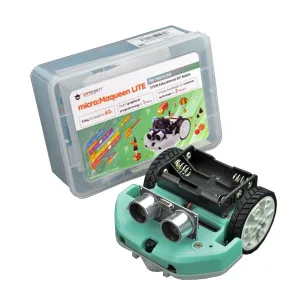
Small wheeled robot based on micro:bit (not included).
 micro:bit
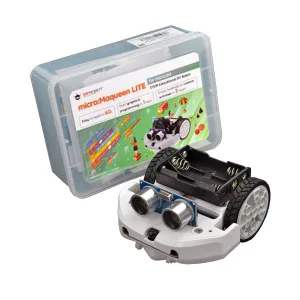
Small wheeled robot based on micro:bit (not included).
 mbed modules
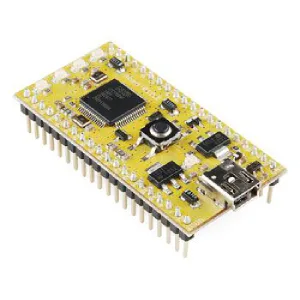
MBED is a board based on the 32-bit ARM® Cortex™ NXP LPC11U24 microcontroller, designed specifically for low-cost prototyping of USB devices and battery-powered applications
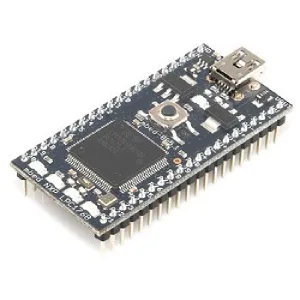 mbed modules
MBED is a board based on the 32-bit ARM® Cortex™ NXP LPC1768 microcontroller running at 96 MHz
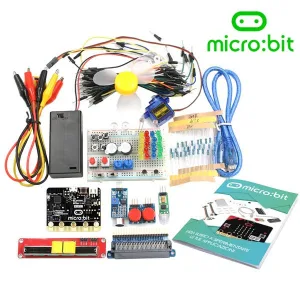 micro:bit
Kit containing a Micro:bit board, a breakout board with a connector for Micro:bit, a manual, a USB-to-microUSB cable, a battery holder with on/off switch for 2 AA 1.5 volt batteries, 3 leads about 50 cm long with crocodile clips (red – black – yellow), a 400-point breadboard with self-adhesive base, 60 male-to-male jumper wires in assorted colours and lengths, a 9 gram RC mini servo, a DC motor with fan, a module with a microphone that picks up the sound level of the surrounding environment, a module with a miniature PIR sensor, 2 buzzers rated 5 volt, 2 PCB-mount trimmers
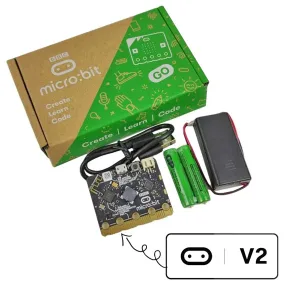 micro:bit
micro:bit V2 board with a 32-bit ARM Cortex-M0 CPU, motion sensors, Bluetooth, microphone and speaker, and more.
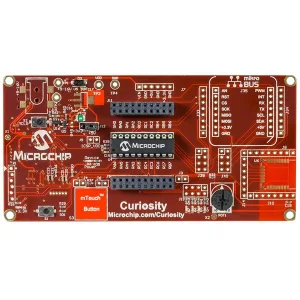 Microchip
Microchip Curiosity is a development board equipped with an 8-bit PIC16F1619 microcontroller
Open-Electronics.org is the brainchild of a world leader in hobby electronics Futura Group srl. Open-Electronics.org is devoted to support development, hacking and playing with electronics: we share exciting open projects and create amazing products!
Open-Electronics.org is not just a container of ideas: it is also a web site lead by a team of engineers and geeks who will take part in the discussions and give support.
Our mission is to become a reference Open Source hacking site with ideas and feedback aimed to enrich the community.