
Uno R3 with Atmega328
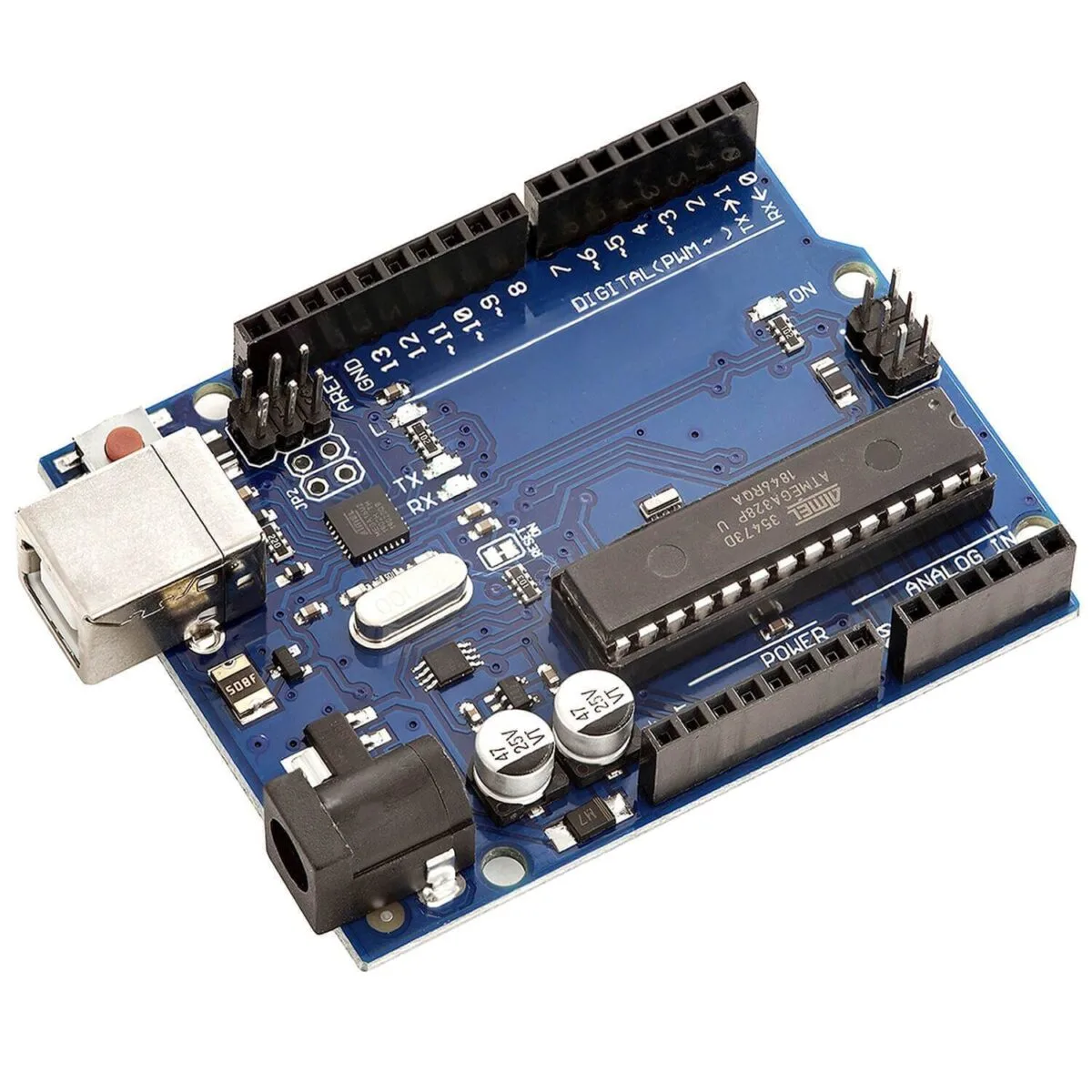
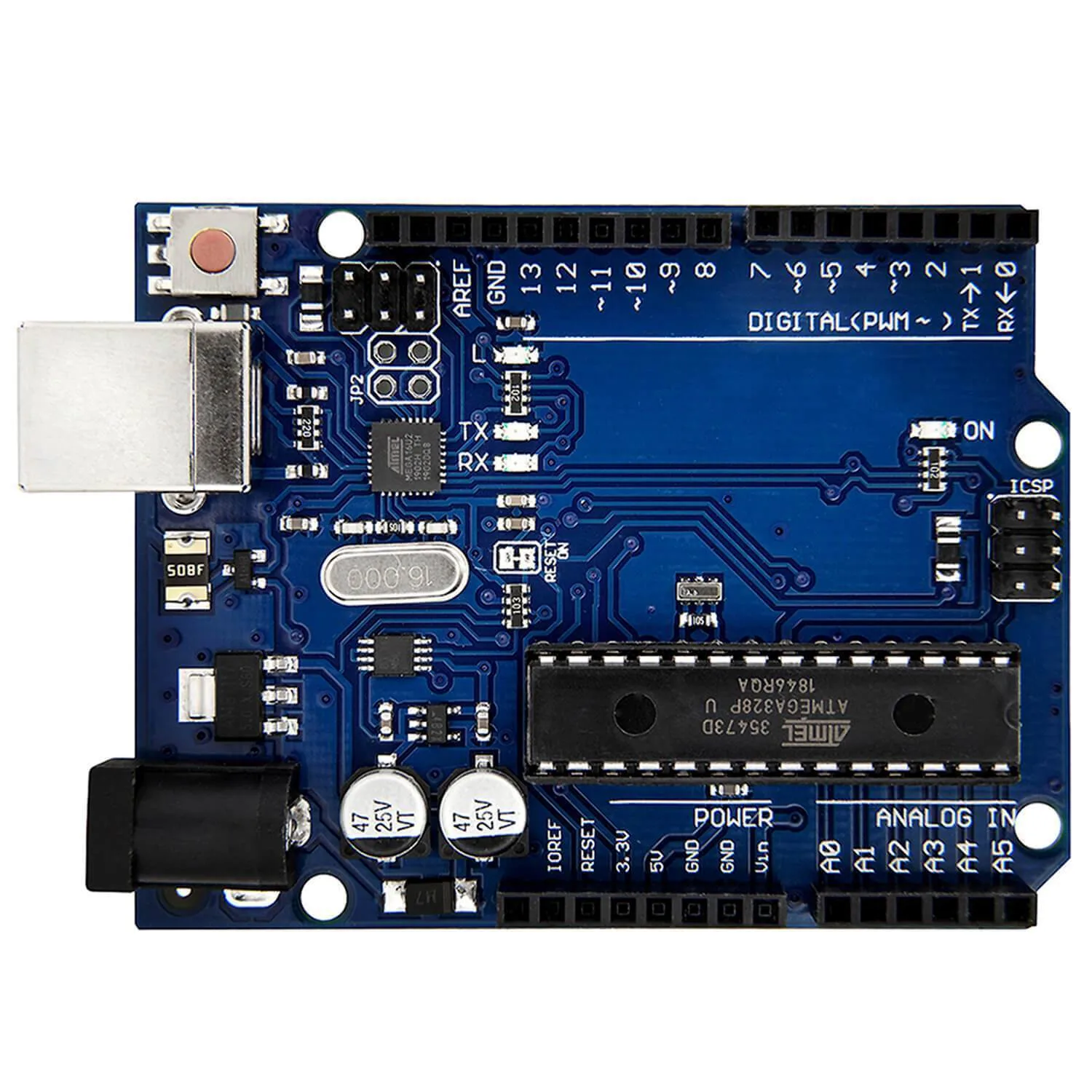
SKU 1606-UNOR3Item type: Assembled, BoardArduino compatible
Description
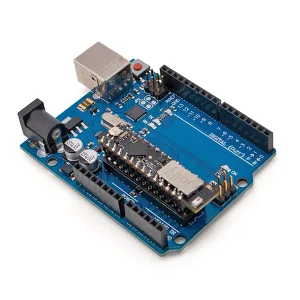
The UNOR3 development board is the ideal platform for electronics prototyping, robotics and your automation projects. Based on the powerful 8-bit ATmega328P, it offers a solid, versatile, ready-to-use hardware architecture. It has 14 digital input/output pins (6 of which support PWM) and 6 analog inputs for accurate sensor readings. Thanks to the built-in ATmega16U2 USB-to-serial interface, it ensures a stable connection to the PC. It can be conveniently powered via USB or an external source (7-12V DC jack).
|
The UNOR3 is an electronic development board designed for rapid prototyping, education, and automating small projects. It’s the ideal entry point into the world of programmable electronics and embedded systems, combining a robust hardware architecture with extreme ease of use. The beating heart of the board is the renowned high-performance ATmega328P microcontroller, an 8-bit chip that offers a perfect balance between power efficiency and computing power. The board integrates all the support circuitry needed to run the microcontroller safely and reliably, eliminating the need for complex external circuits and letting you focus solely on code development and component connections. A Complete, Ready-to-Use Hardware Infrastructure
Connectivity, Communication, and Flexible Power Supply Power management is also designed for maximum versatility in the field:
Whether you’re taking your first steps in robotics, programming a home weather station, or developing an industrial prototype, the UNOR3 offers the stability and flexibility you need to bring any idea to life. |
|
| DC Current for the 3.3V Pin | 50 mA |
| USB-to-Serial Converter | ATmega16U2, built in on-board (for stable programming and debugging without complex drivers) |
Technical details
| Technical Parameter | Specification and Operating Value |
|---|---|
| Model Code | UNOR3 |
| Main Microcontroller | ATmega328P (8-bit AVR architecture) |
| Operating Voltage (Logic) | 5 V |
| Supply Voltage (Recommended) | 7 - 12 V (via DC jack or VIN pin) |
| Supply Voltage (Limits) | 6 - 20 V |
| Digital I/O Pins | 14 (6 of which offer PWM output) |
| Analog Input Channels | 6 (A0 to A5) |
| DC Current per I/O Pin | 40 mA (recommended maximum) |
| Flash Memory | 32 KB (ATmega328P), of which 0.5 KB is used by the bootloader |
| SRAM (Volatile Memory) | 2 KB |
| EEPROM (Non-volatile Memory) | 1 KB |
| Clock Speed | 16 MHz |
| Interface Connector | USB Type B port |
You may also like…
-
 Control electronics
 -
 Actuators
 -
 Displays
 -
 Sensors
 -
 Sensors
 -
 Arduino
 -
 Control electronics
 -
 Sensors
 -
 LEDs
LEDs -
 Sensors
 -
 STEM
STEM -
 Arduino
 -
 Sensors
 -
 Robots
 -
 Displays
 -
 Arduino
 -
 Displays
 -
 Sensors
 -
 Sensors
Related products
-
 Arduino compatible
 -
 Arduino compatible
 -
 ESP8266 / ESP32
 -
 Arduino compatible
 -
 Arduino compatible
 -
 Arduino compatible
 -
 Development systems
 -
 Arduino compatible